The onomatopoeic word “snarking” already had been used in the year 1866.

more | Snark is older than Lewis Carroll
2017-08-28, updated: 2025-11-03
Götz Kluge's blog about Lewis Carroll and Henry Holiday's tragicomedy
The onomatopoeic word “snarking” already had been used in the year 1866.

more | Snark is older than Lewis Carroll
2017-08-28, updated: 2025-11-03

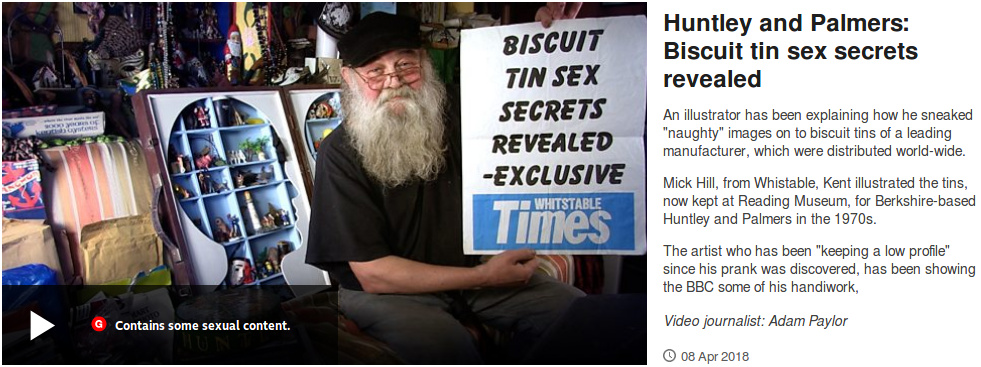
In a BBC video, video journalist Adam Paylor gives us a good example for why things might be hidden in art: Besides assuming that people who see cryptomorphs in artwork might just be suffering from pareidolia, often one important reason for hiding things in art is neglected by art researchers: Hiding things in images can be fun!
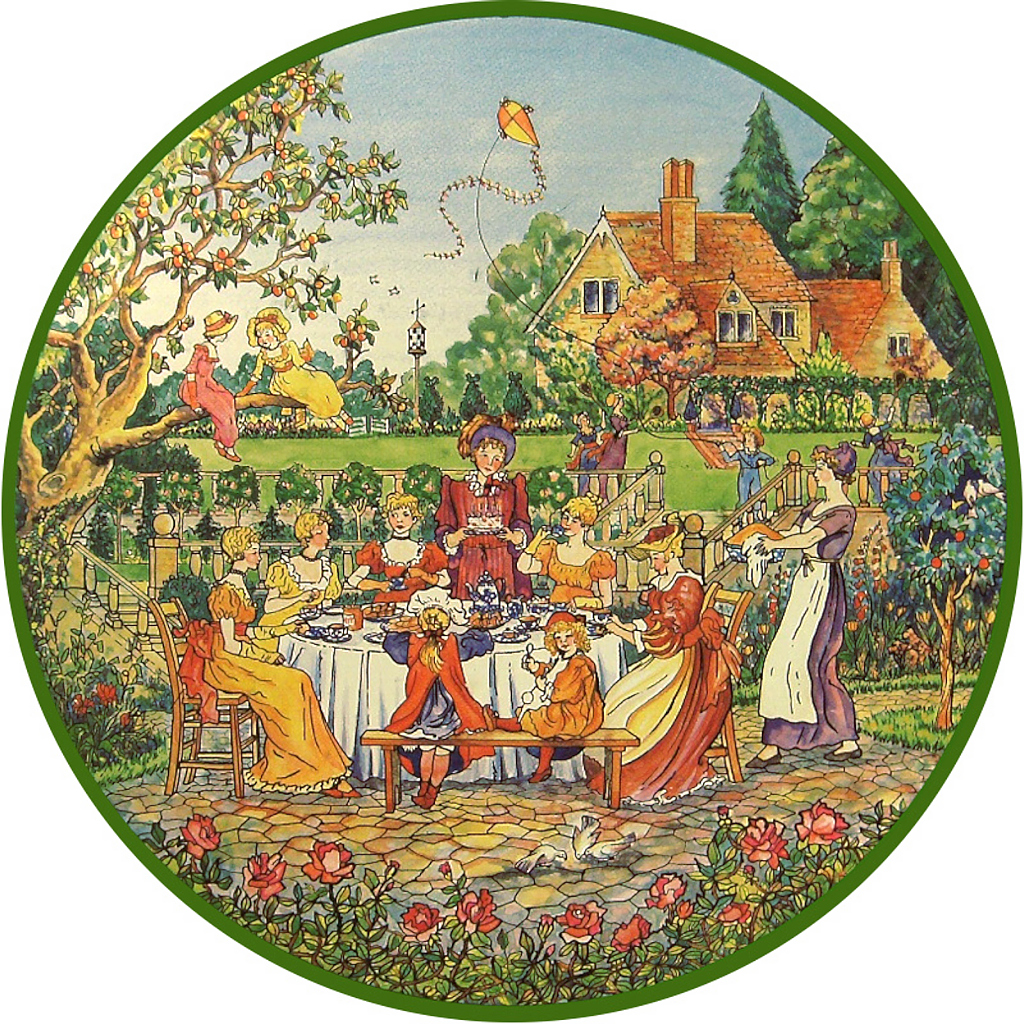
Also from http://severnbeachantiques.com/famous-rare-1980-huntley-and-palmer-rude-garden-party-ginger-nuts-tin you can learn about a good reason for an artist to hide things in art:
I did them out of devilment, purely for a laugh. I’ve always been a bit of a naughty boy but I’ve nothing against Huntley & Palmers. There have been rumours that I got made redundant and did it out of revenge. But that’s not true – I was only ever a freelance. I just felt like adding a bit of smut to the proceedings.
That is what Mick Hill, the creator of the illustration of the Huntley & Palmers garden party ginger nuts tin, said about the hidden surprises in his artwork.
2018-07-01, updated: 2025-04-06
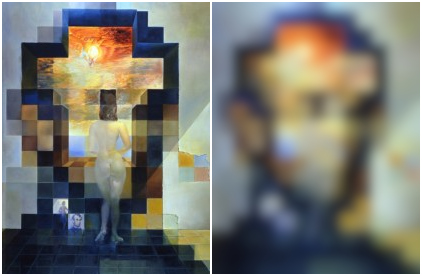
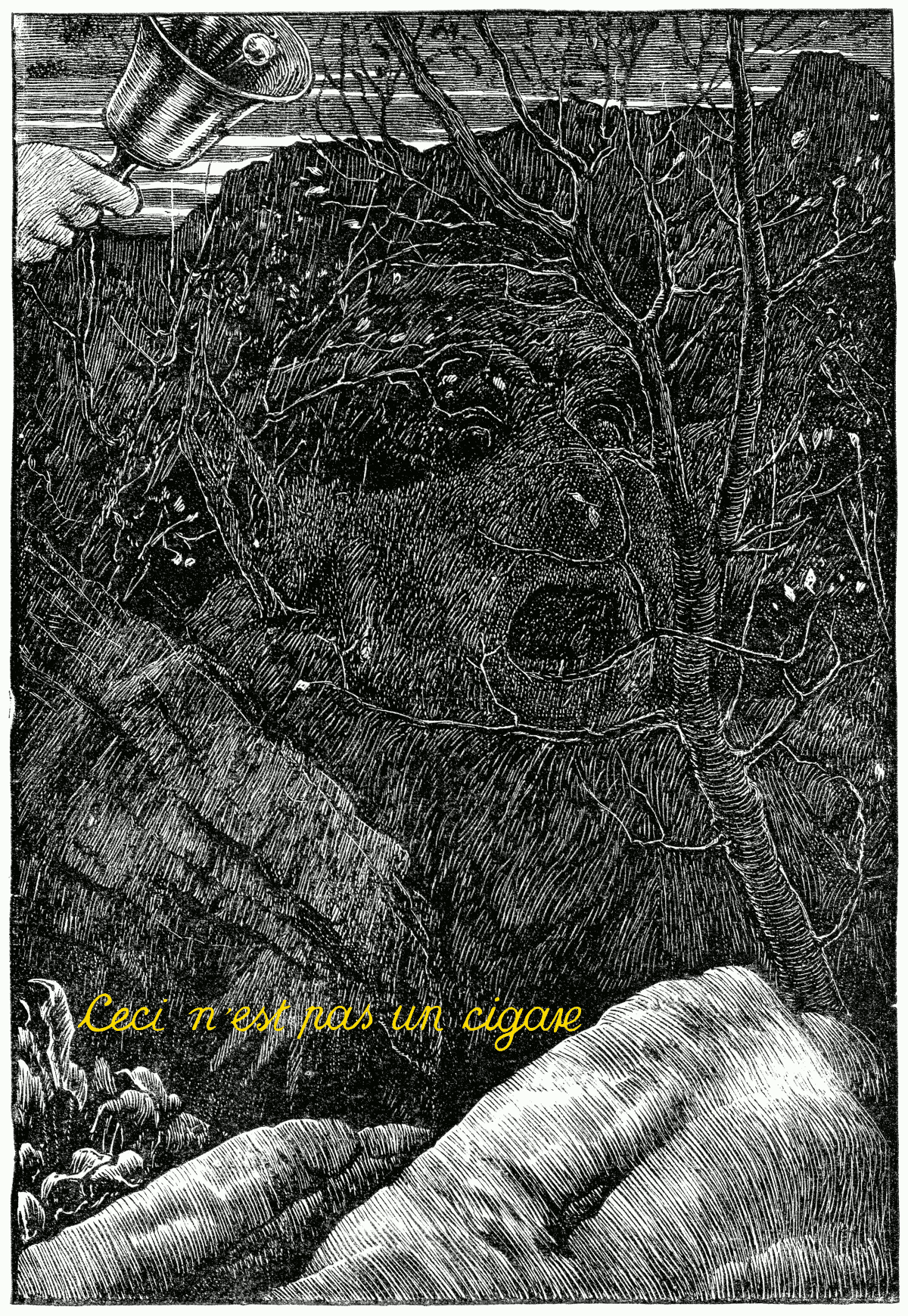
Blurring images works almost like low pass filtering images. An artist’s blunted sight can have the same effects like blurring with computerized image processing. Sometimes you need to get rid of distracting details in order to get the whole picture.
Before computerized image processing was available, artists use simple techniques to blur images. For example, looking at an image through a feather did the trick.
Blurring might help you to see things which you wouldn’t see with clear sight. It’s fine to try that with artwork which might have been intentionally created for such an exercise. But better make sure that it was an artist who created the face that is looking at you. I don’t know whether Mars ever has been inhabited by artists.
Rather than suffering from pareidolia, artists get inspired by it.

Sometimes blurring helps to reveal structures hidden in the hatching.

See also: Susana Martinez-Conde, Dave Conley, Hank Hine, Joan Kropf, Peter Tush, Andrea Ayala and Stephen L. Macknik: Marvels of illusion: illusion and perception in the art of Salvador Dali
2017-12-28, updated: 2025-02-07
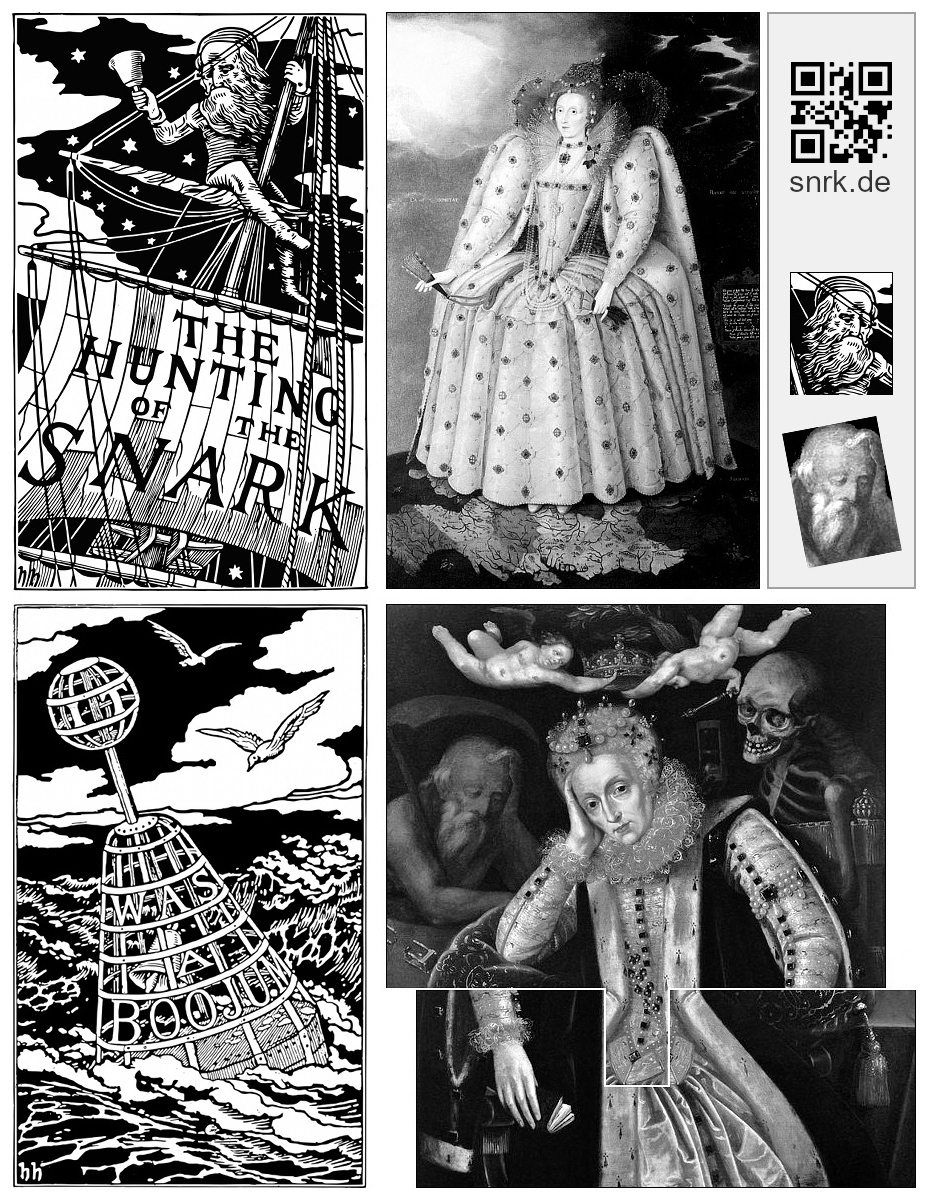
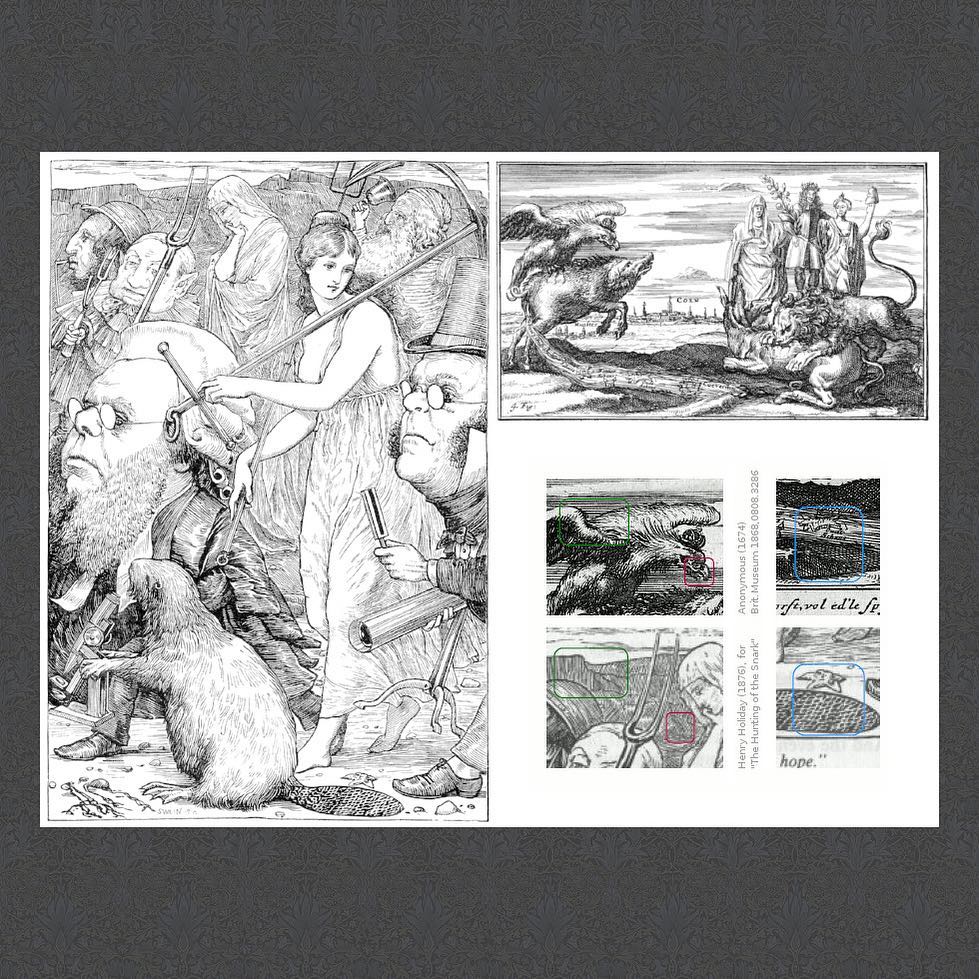
John Tufail’s “The Illuminated Snark” (p. 15) lead me to this comparison. In 2004 he interpreted the starry night sky in Henry Holiday’s front cover illustration to Lewis Carroll’s “The Hunting of the Snark” (1876) as a map, where the white clouds represented land with rivers. I liked the suggestion, but did not find any real-world map to which Holiday might have alluded. Holiday engraved that illustration himself.
I discovered John Tufail’s paper in 2009. Only today, after 15 years, I got the idea to compress and flip a large segment of a map of the British isles vertically. That’s my “slowness in taking a jest”. You see the result. Sadly, I can’t tell John that anymore. I appreciated his guidance a lot. The white clouds weren’t the land, but as for a map having been hidden in the illustration, John was right.
For comments: reddit: r/LewisCarroll, r/Maps, r/MapPorn
2024-05-12, update: 2024-06-25
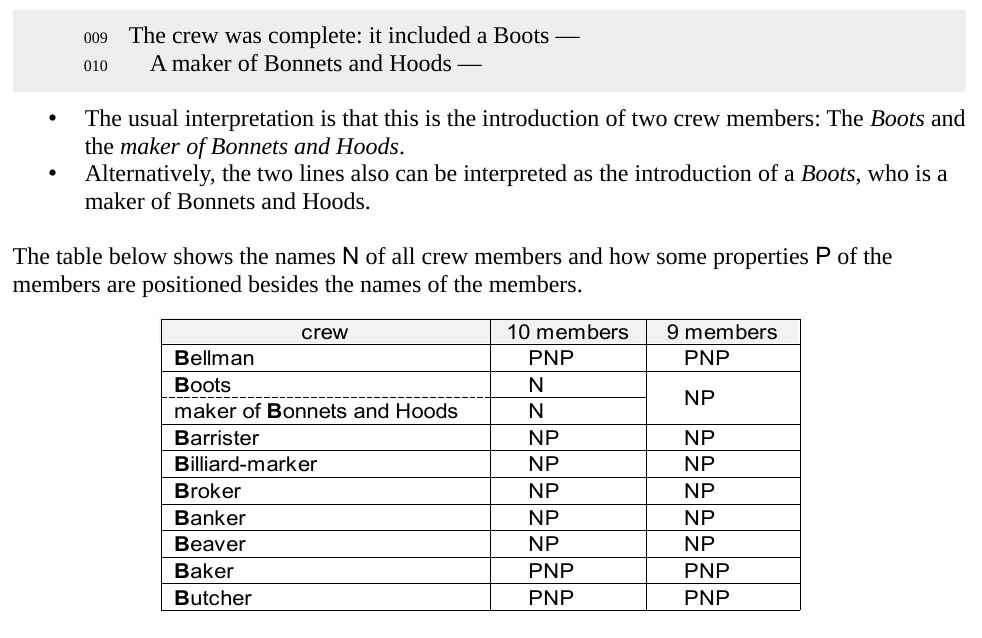
Most readers of The Hunting of the Snark assume that the Snark hunting party consists of ten members. However, probably for a good reason, only nine members can be seen in Henry Holiday’s illustrations to Lewis Carroll’s ballad. Actually, I really think that the Snark hunting party consists of nine members only. But if you, as almost everybody else, prefer ten Snark hunters, that’s fine too. Lewis Carroll gave you (and me) a choice, incidentally(?) in the 9th and the 10th line of his tragicomedy.
Let us take all the crew members in order of their introduction:

More about the members of the Snark hunting party:
⭐ 9 or 10 hunters?
⭘ Care and Hope
⭘ The Snark
⭘ The Boojum
2017-11-06, updated: 2024-06-13
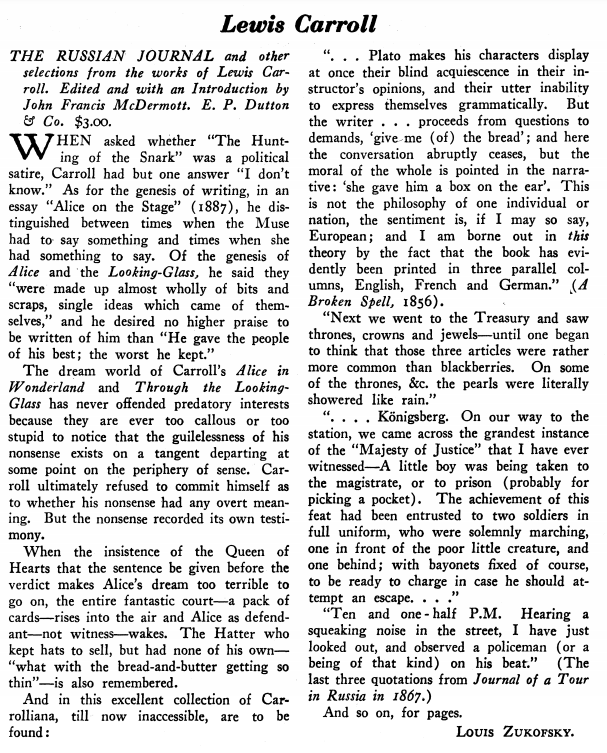
Louis Zukofsky, “Review of Lewis Carroll, Russian Journal,” The New Masses (1935-10-08)
Authors, who say that they “don’t not know” whether their book is satire, might just tell an honest lie. Explaining that satire is satire is boring.
Of course “The Hunting of the Snark” contains satire. Dodgson wasn’t stupid. Satirists who explain their work would kill their work. E.g. in case of the “bathing machines“, “The Hunting of the Snark” took a reference to one of Carroll’s obvious satires.
By the way: I thought that Carroll’s Snark creation story “I was walking on a hillside, alone, one bright summer day, when suddenly there came into my head one line of verse — one solitary line — ‘For the Snark was a Boojum, you see.'” was another honest lie, a “lime twig for critics“. But after checking the weather of that day I am not so sure anymore. It was a bright summer day.
ex Twitter | contextualising Carroll
2019-06-23, update: 2024-06-11
On 1875-11-06 Carroll wrote in his diary about his Snark poem:
The first stanza was composed in July 22. 1874. “In the midst of the word…” which stands as the last verse of the poem. But the very last line, “For the Snark was a Boojum, you see” came into my head while out on a walk at Guildford, July 18[.]
Source: Edward Wakeling (Ed.), Lewis Carroll’s Diaries, Vol. 6, 2001, p. 432
I was walking on a hillside, alone, one bright summer day, when suddenly there came into my head one line of verse — one solitary line — “For the Snark was a Boojum, you see.” I knew not what it meant, then: I know not what it means, now; but I wrote it down: and, some time afterwards, the rest of the stanza occurred to me, that being its last line: and so by degrees, at odd moments during the next year or two, the rest of the poem pieced itself together, that being its last stanza.
Source: From Lewis Carroll’s notes, found in Alice on Stage, The Theatre, April 1887.
See also: https://web.archive.org/web/20240504231527/https://kellyrfineman.livejournal.com/173027.html
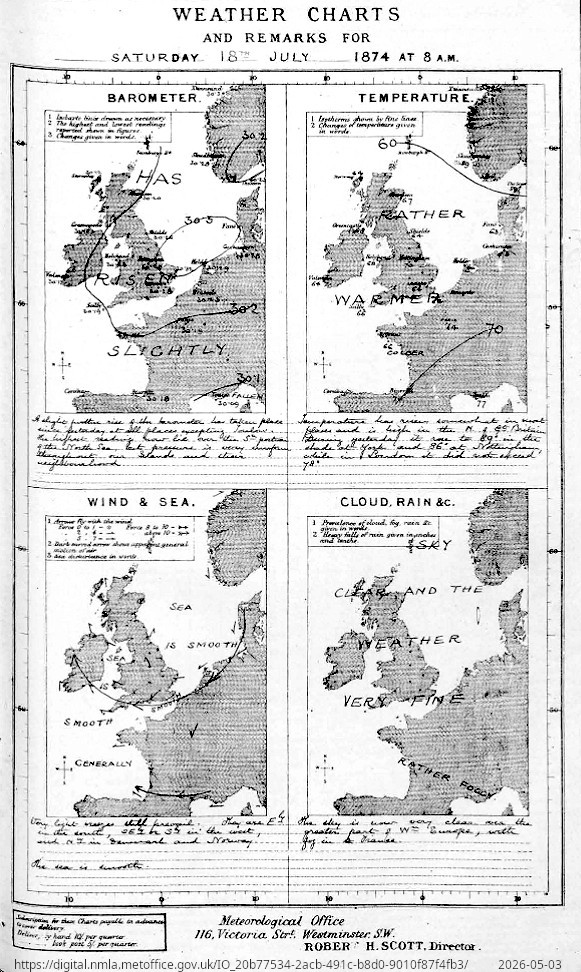
I think that leaving such a nice origination story to his readers is part of Carroll’s skillful marketing of his Snark ballade. Oliver Sturm, who translated The Hunting of the Snark into German (Die Jagd nach dem Schnatz. 1996, ISBN 978-3-15-009433-4, p. 85) called that a “Leimrute für Kritiker” (“lime twig for critics”). Sturm might be wrong. At least, Carroll didn’t make up the bright summer day: “The sky was clear and the weather was very fine.”
I don’t think that Carroll dishonestly misleads his readers when he said “I know not what it means“. Of course he knows. He just made his poem as ambiguous as possible. The motive: Widening the interpretation space of his Snark poem. With that wider space, a book makes more readers happy (and therefore sells better, which is a nice side effect).
In case his readers (like me) think they have discovered some obfuscated meaning, it is the reader (again like me) who can be hold responsible for her or his interpretation, not the author. So, as for my interpretations, there still is the possibility that I am misleading myself.
This is why the Snark hunt never will end.
2017-12-17, updated: 2024-06-04
This is the first page published in snrk.de, a blog which was set up in 2017. It’s mostly about Lewis Carroll‘s, Henry Holiday‘s and Joseph Swain‘s illustrations to The Hunting of the Snark.

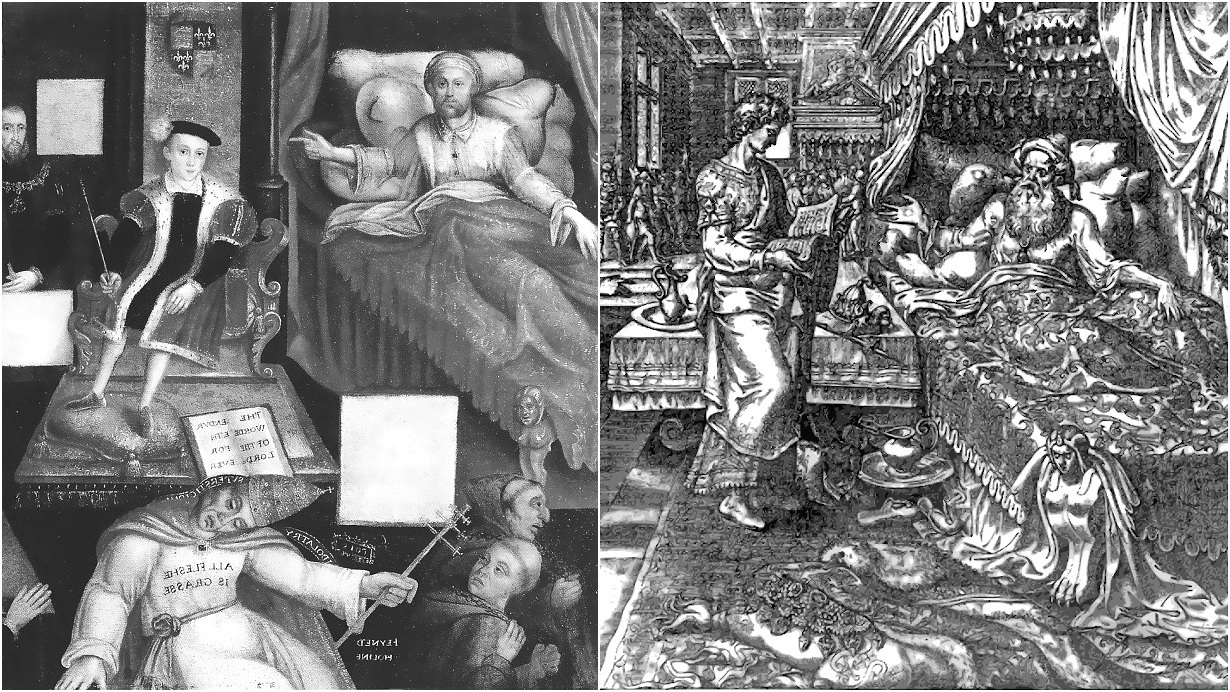
In his Illuminated Snark, John Tufail assumed that the night sky in the front cover of The Hunting of the Snark could be a map. Together with my assumption that Henry Holiday drew inspiration from several paintings by Marcus Gheeraerts (I+II), John’s paper helped me to find the Ditchley Portrait. That again helped me to find the painting by an unknown artist depicting Elizabeth I at old age.
It took me several years to find another map to which Henry Holiday might have referred as well.
2017-08-28, update: 2024-05-12
2017-09-17, update: 2024-05-01
My first Snark encounter was in 2005. Then, after almost four years, I entered the Snark hunting grounds in December 2008. http://www.artandpopularculture.com/User:Goetzkluge could give you an idea where I was in 2010.

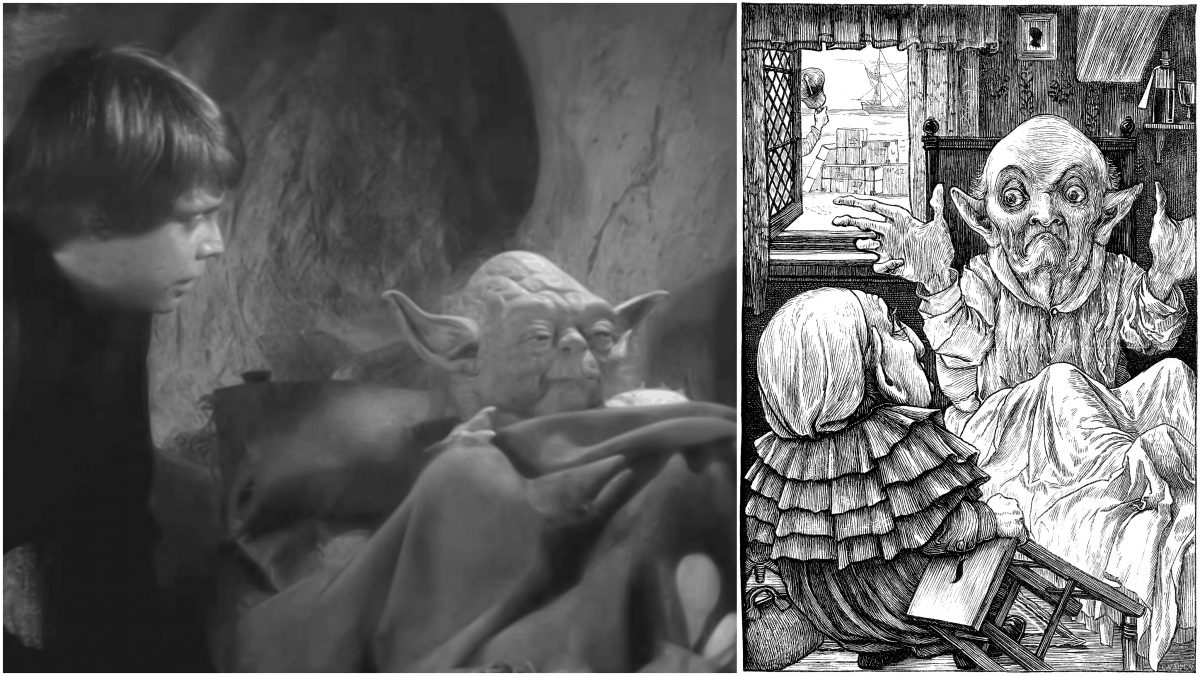
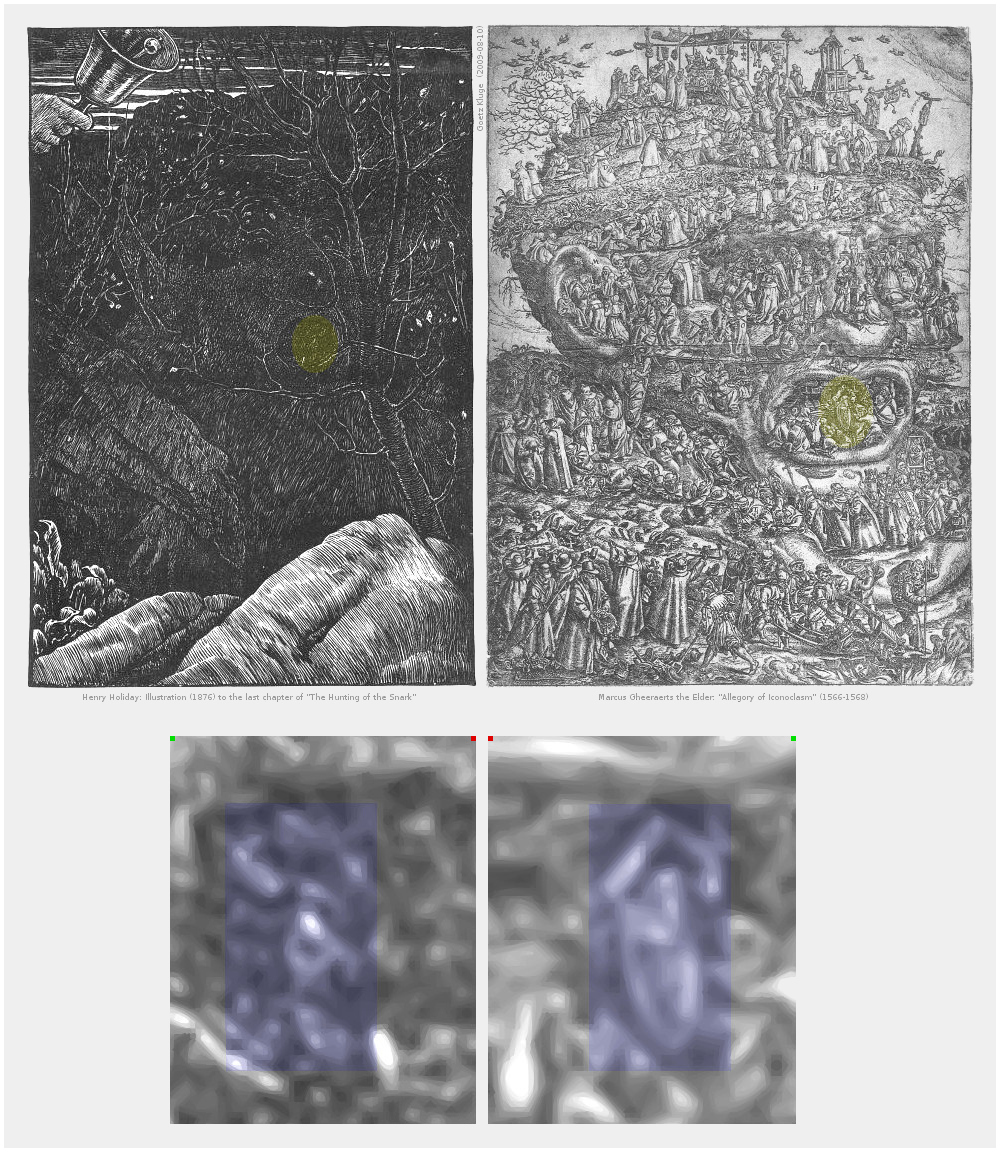
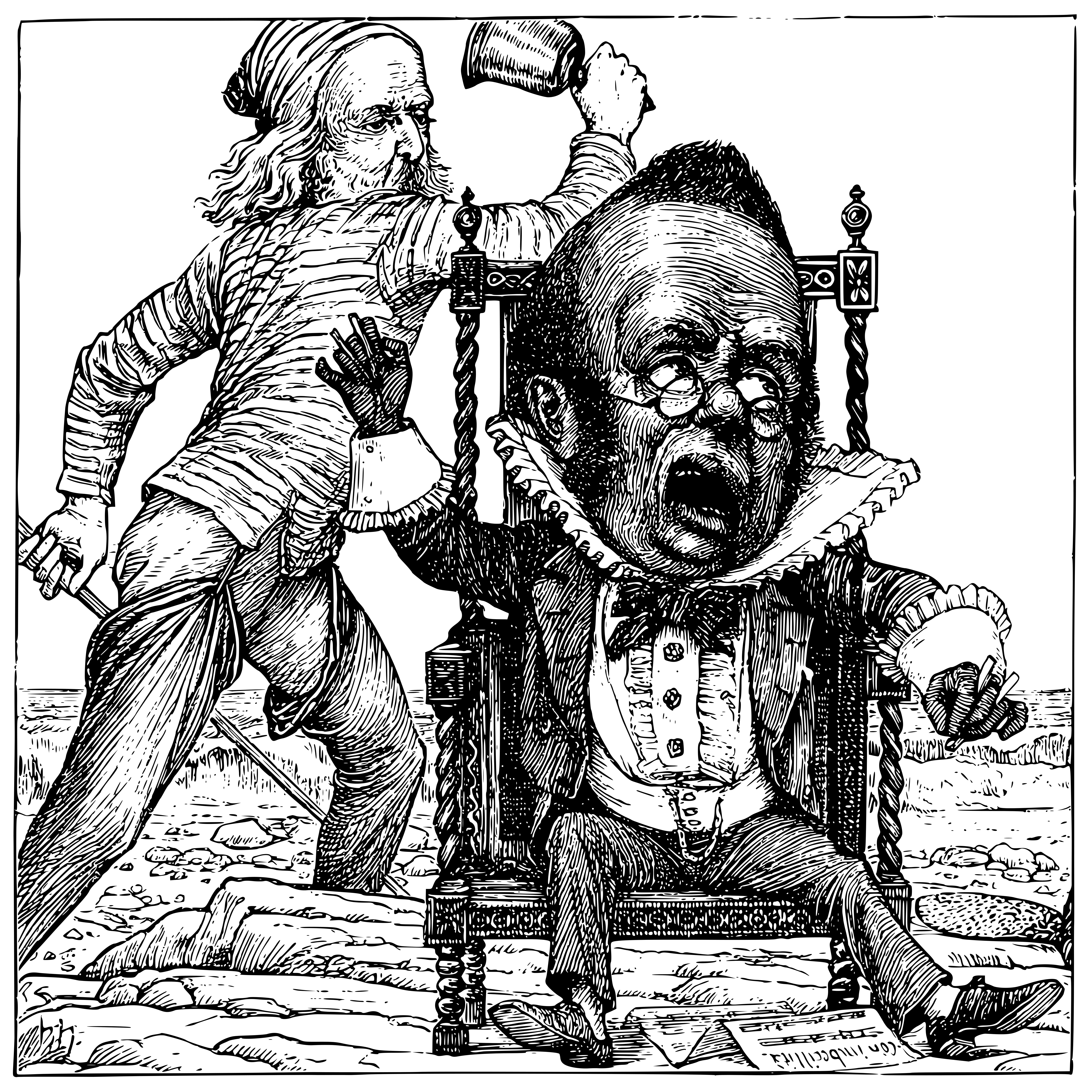
The image shows illustrations by Henry Holiday (from The Hunting of the Snark, 1876) and Marcus Gheeraerts the Elder (Allegory of Iconoclasts, aka The Image Breakers, around 1567): In the “mouth” of Gheeraerts’ “head” a praying priest is depicted. The shape of the priest also is visible in the “mouth” of Holiday’s vanishing “Baker”.
There is more — with acknowledgements to Mahendra Singh, to John Tufail and to the Internet.
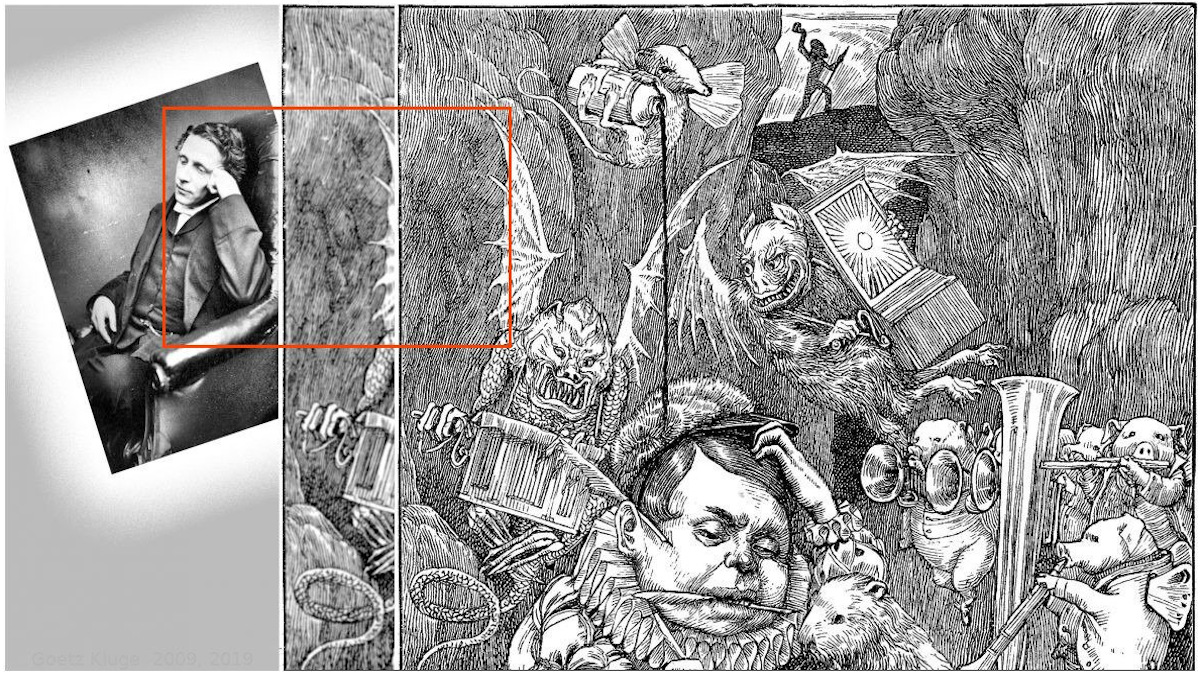
And there are more big heads.
Articles in this blog about Henry Holiday’s illustration to the chapter The Vanishing.
2017-08-28, updated: 2023-11-03
What you “see” depends on what choices pareidolia (or the prince) offers to you.
Hamlet: Do you see yonder cloud that’s almost in shape of a camel?
Polonius: By th’ mass and ’tis: like a camel indeed.
Hamlet: Methinks it is like a weasel.
Polonius: It is backed like a weasel.
Hamlet: Or like a whale.
Polonius: Very like a whale.
– From Hamlet (1603) by William Shakespeare, Act III, Scene 2
I found these lines in the article See faces in the clouds? It might be a sign of your creativity by René Müri and Nicole Göbel.
Links:
※ Playing with Pareidolia
※ On Borrowing
※ Noses
2023-10-10
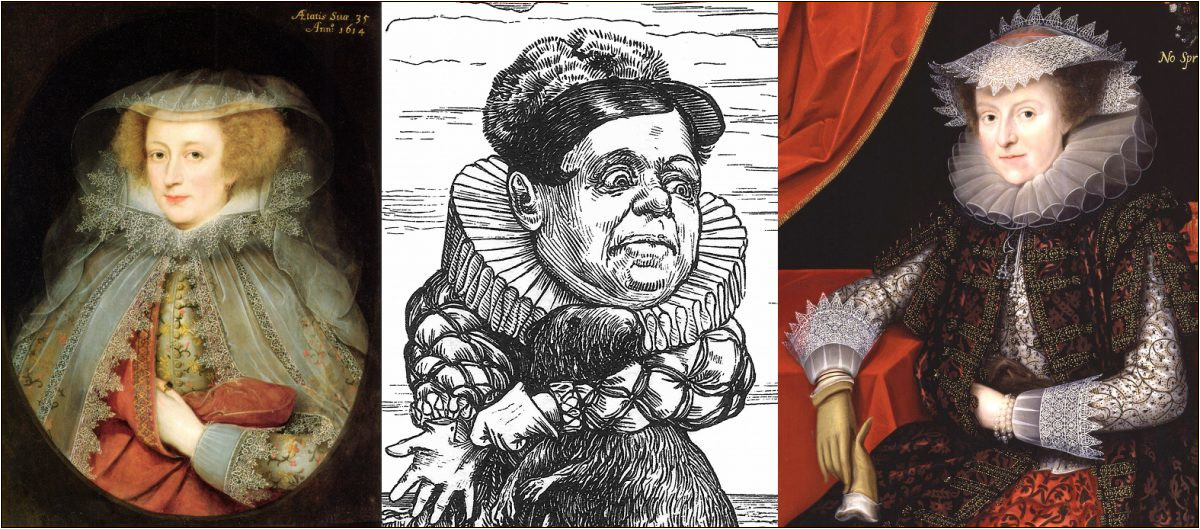
No Spring til now: Mary Throckmorton, Lady Scudamore, painted by Marcus Gheeraerts in 1614. What was that message about, I wonder? pic.twitter.com/aBE2TxD6oa
— Peter Paul Rubens (@PP_Rubens) January 20, 2019
exquisite. what is she hiding/nursing?
— Christine Bagot (@cm_bagot) January 20, 2019
That's what I was wondering. It looks… furry
— Aphra Pell (@AphraPell) January 20, 2019
Could be a flohpelze or zibellino – could she have been pregnant at the time?
— Sally Hickson (@HalcyonSilks) January 20, 2019
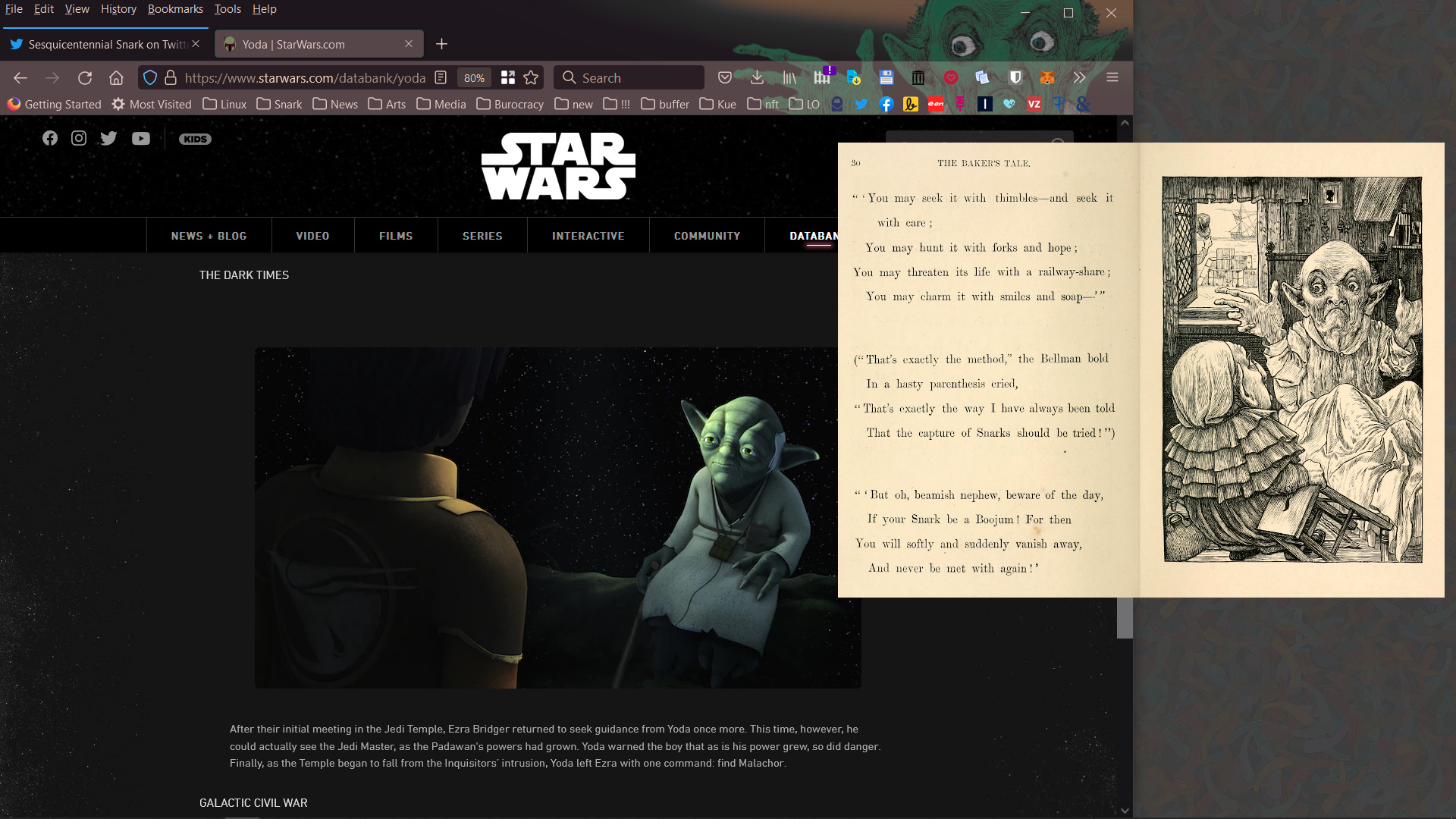
To some those scarfs might look "furry". @AphraPell, it is interesting that you say that, because perhaps that's what Henry Holiday "saw" when he got inspired by Gheeraerts for an illustration to Lewis Carroll's "The Hunting of the Snark". — https://t.co/DhiHH0Usu0 pic.twitter.com/PtwlHPhmDE
— Goetz Kluge (@Bonnetmaker) January 20, 2019
2/2 Catherine Killigrew, Lady Jermyn, beautifully painted also in 1614 by Marcus Gheeraerts. It’s his day today. pic.twitter.com/l7RDGIEycB
— Peter Paul Rubens (@PP_Rubens) January 19, 2019
inspiration by re-interpretation
2019-01-20, updated: 2023-10-05
2023-03-10
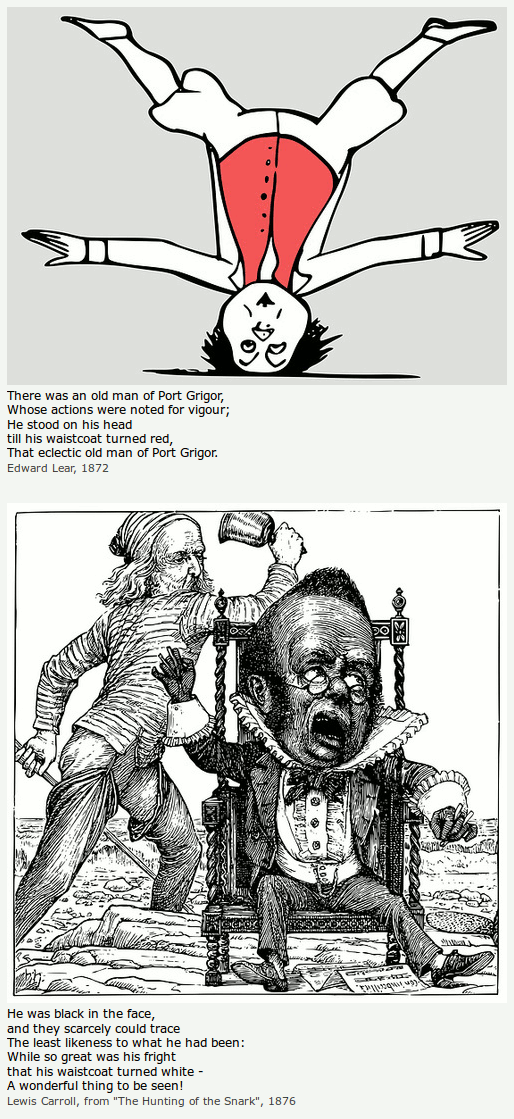
There was an old man of Port Grigor,
Whose actions were noted for vigour;
He stood on his head
till his waistcoat turned red,
That eclectic old man of Port Grigor.
He was black in the face,
and they scarcely could trace
The least likeness to what he had been:
While so great was his fright
that his waistcoat turned white –
A wonderful thing to be seen!
Lewis Carroll, from “The Hunting of the Snark”, 1876
Martin Gardner annotated (MG058) to The Hunting of the Snark that Elizabeth Sewell pointed out in The Field of Nonsense (1952) that a line in Carroll’s poem has a similarity to a line in a limerick by Edward Lear.
See also:
In The Field of Nonsense (I use a 2015 reprint), Elizabeth Sewell compared Carroll’s waistcoat stanza and Lears’s waistcoat limerick while taking a safe distance to considering “mutual plagiarism” by stating that “there is no evidence that either man was familiar with the other’s work”, adding that “the likeness do not in any case suggest borrowings…” (p. 9). However, Carroll/Dodgson knew Lear’s work (Marco Graziosi), and borrowing isn’t necessarily evil.
2017-09-11, update: 2022-10-24
One of the surest tests [of a poet’s superiority or inferiority] is the way in which a poet borrows. Immature poets imitate; mature poets steal; bad poets deface what they take, and good poets make it into something better, or at least something different. The good poet welds his theft into a whole of feeling which is unique, utterly different than that from which it is torn; the bad poet throws it into something which has no cohesion. A good poet will usually borrow from authors remote in time, or alien in language, or diverse in interest.
T. S. Eliot, p. 114 in The Sacred Wood: Essays on Poetry and Criticism, 1920
Likewise, a good illustrator welds the theft into a whole of feeling which is unique, utterly different and sometimes even funnier than that from which it is torn.

And Lewis Carroll may have borrowed from Thomas Gray.
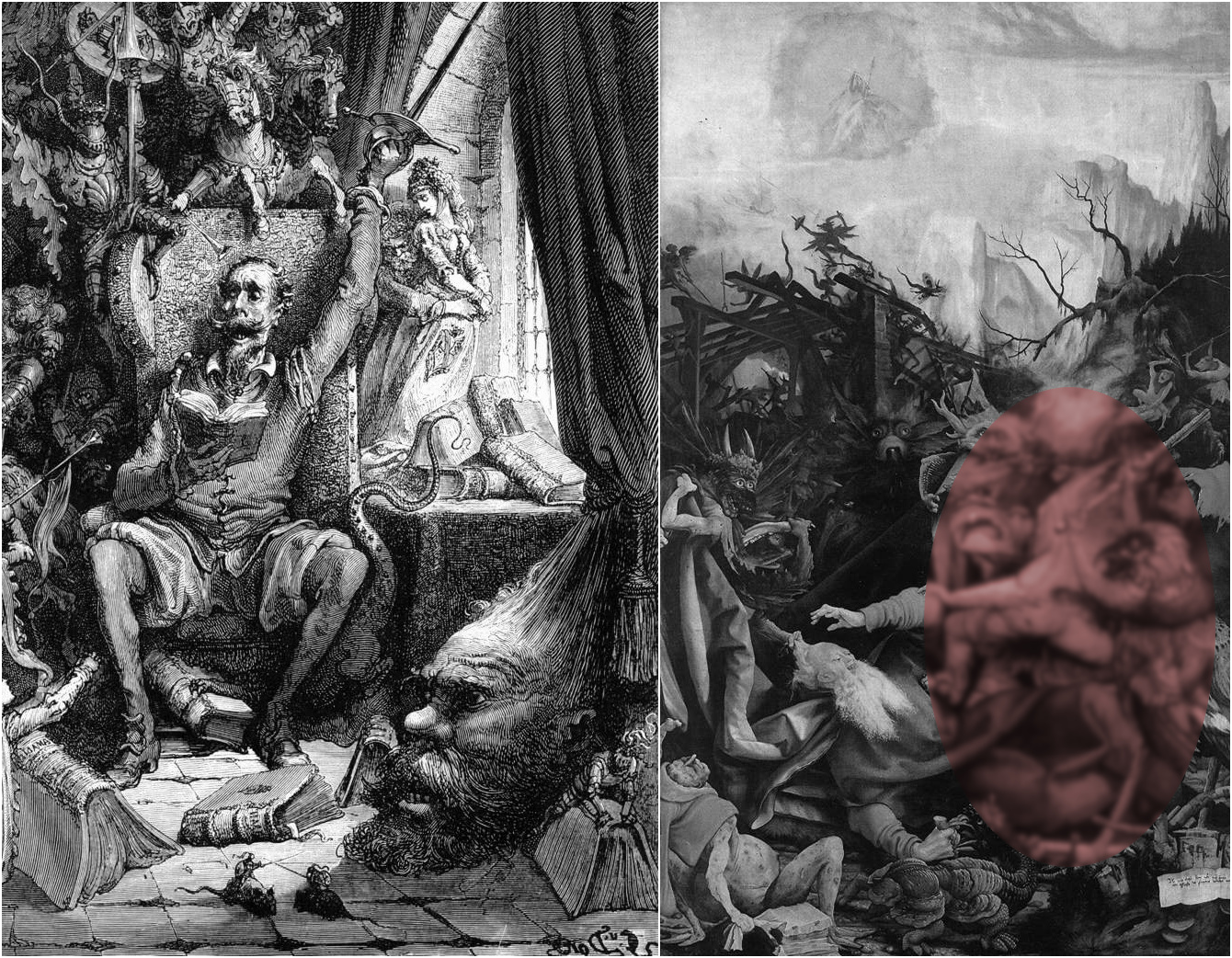
All art is infested by other art.
(Leo Steinberg, in Art about Art, 1979)
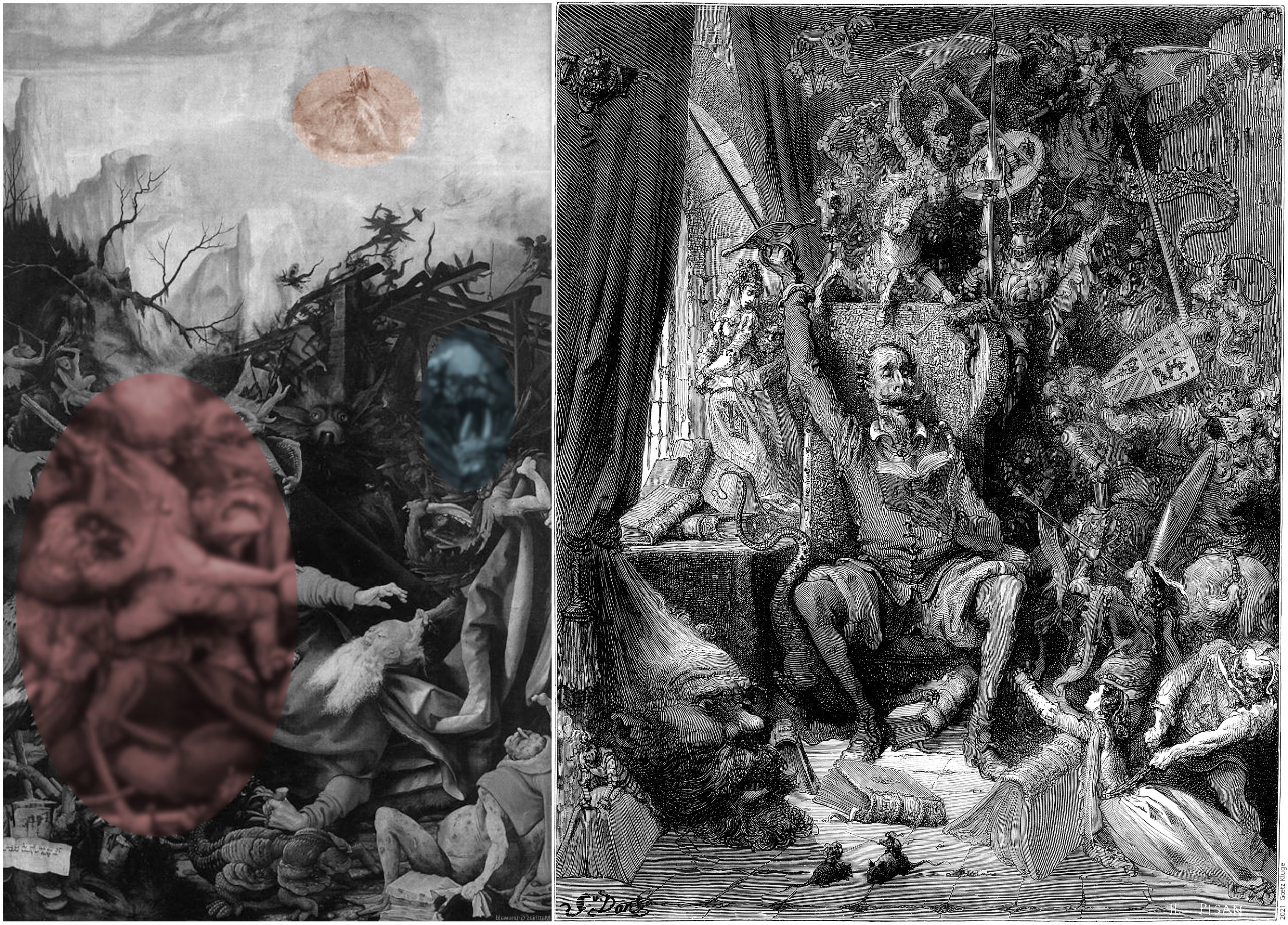
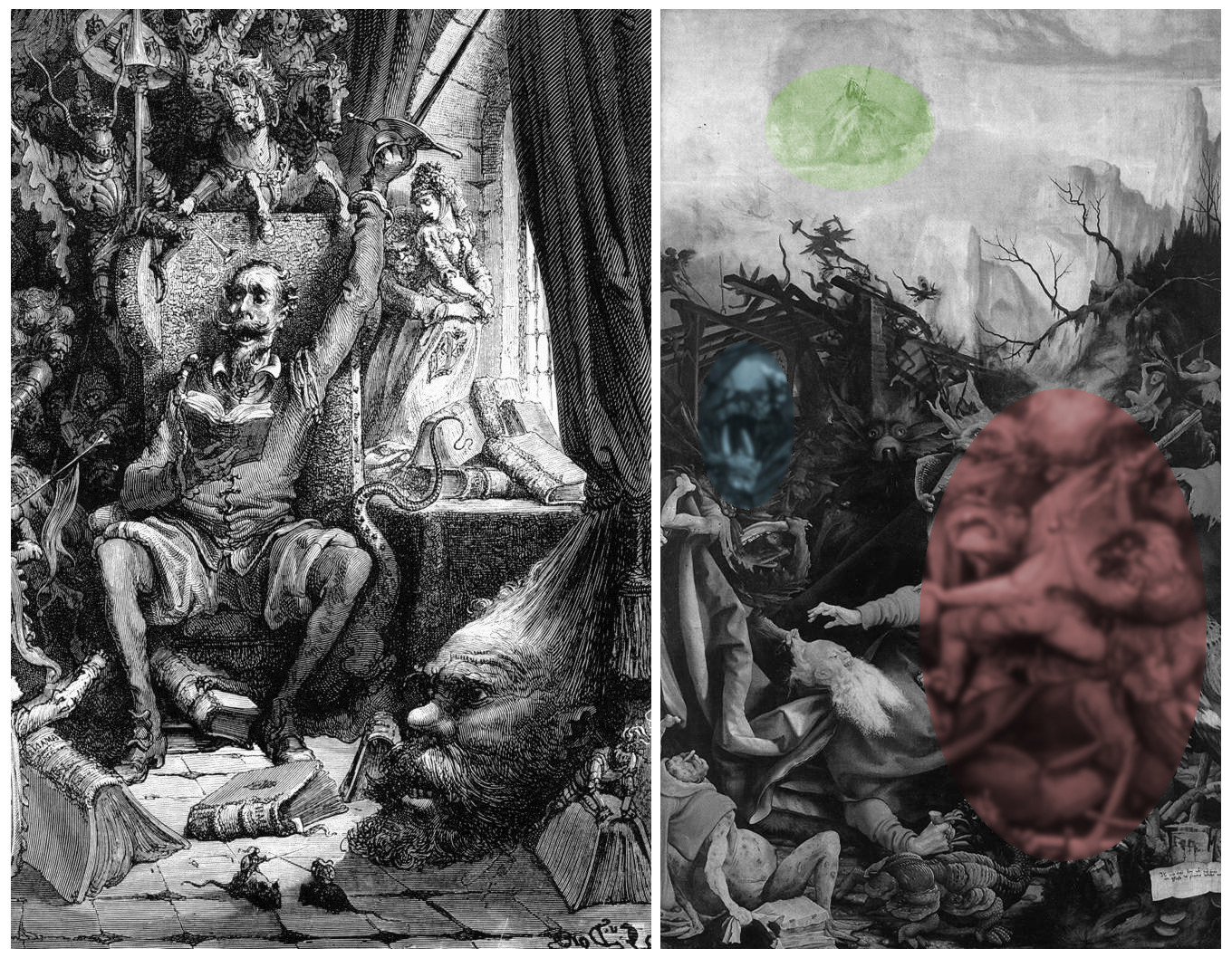
Gustave Doré was an inspired master thief too:
Segments from:
※ Plate I (mirror view) of Gustave Doré’s illustrations to Miguel de Cervantes’ Don Quixote (1863),
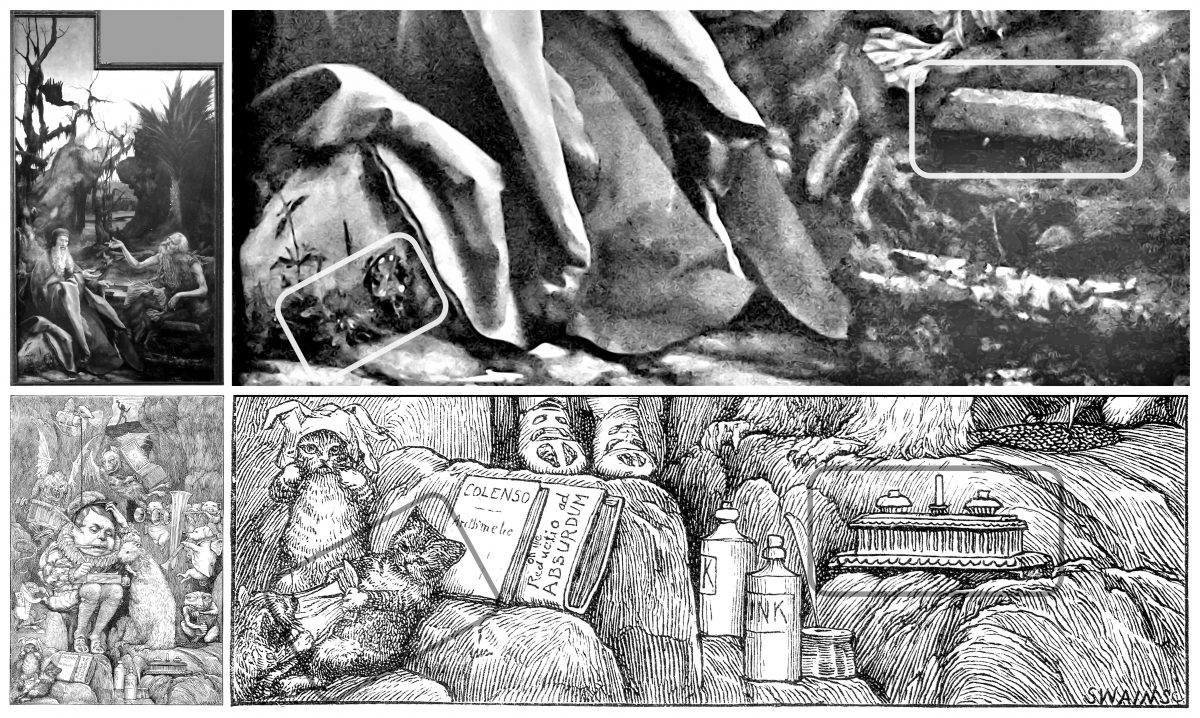
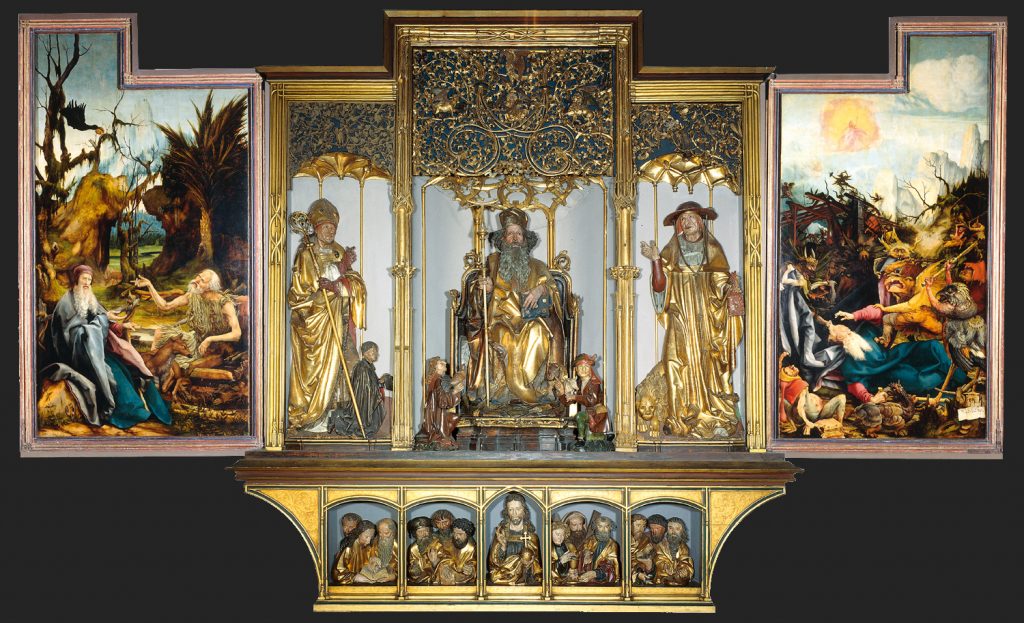
※ Matthias Grünewald’s Temptation of St Anthony (c. between 1512 and 1516, a panel of the Isenheim Altarpiece, now located at Musée Unterlinden, Colmar, France).


2018-02-18, update: 2022-09-05
Part of C.L. Dodgson’s (Lewis Carroll’s) Snark marketing was to claim that he doesn’t know the meaning of The Hunting of the Snark. But there was a meaning which he liked
To Mary Barber
The Chestnuts, Guildford
January 12, 1897My dear May,
In answer to your question, “What did you mean the Snark was?” will you tell your friend that I meant that the Snark was a Boojum. I trust that she and you will now feel quite satisfied and happy.
To the best of my recollection, I had no other meaning in my mind, when I wrote it: but people have since tried to find the meanings in it. The one I like best (which I think is partly my own) is that it may be taken as an Allegory for the Pursuit of Happiness. The characteristic “ambition” works well into this theory—and also its fondness for bathing-machines, as indicating that the pursuer of happiness, when he has exhausted all other devices, betakes himself, as a last and desperate resource, to some such wretched watering-place as Eastbourne, and hopes to find, in the tedious and depressing society of the daughters of mistresses of boarding-schools, the happiness he has failed to find elsewhere.
With every good wish for your happiness, and for the priceless boon of health also, I am
Always affectionately yours,
C.L. Dodgson
To all meaning deniers in a nutshell: There is a meaning which partly is Carroll’s own meaning. Therefore The Hunting of the Snark has at least one meaning.
About “May”vs. “Mary”: In The Selected Letters of Lewis Carroll (1982, edited by Morton Cohen) and in all copies of this letter in the internet, C.L. Dodgson (aka Lewis Carroll) is being quoted as having addressed Mary Barber with “My dear May”, not with “My dear Mary”. I learned that “My dear May” is correct: Quora | Xwitter
2018-04-29, update: 2022-07-16
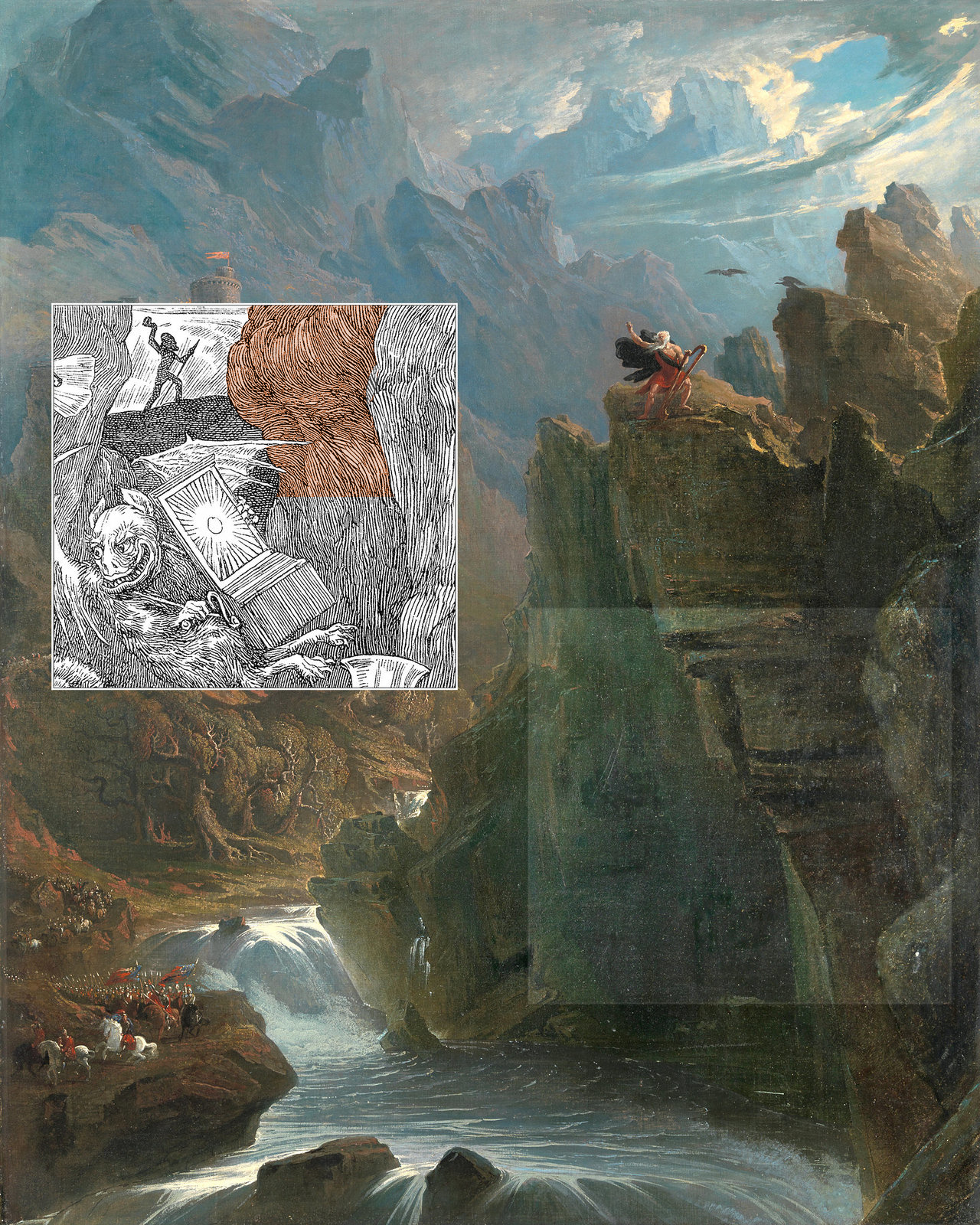
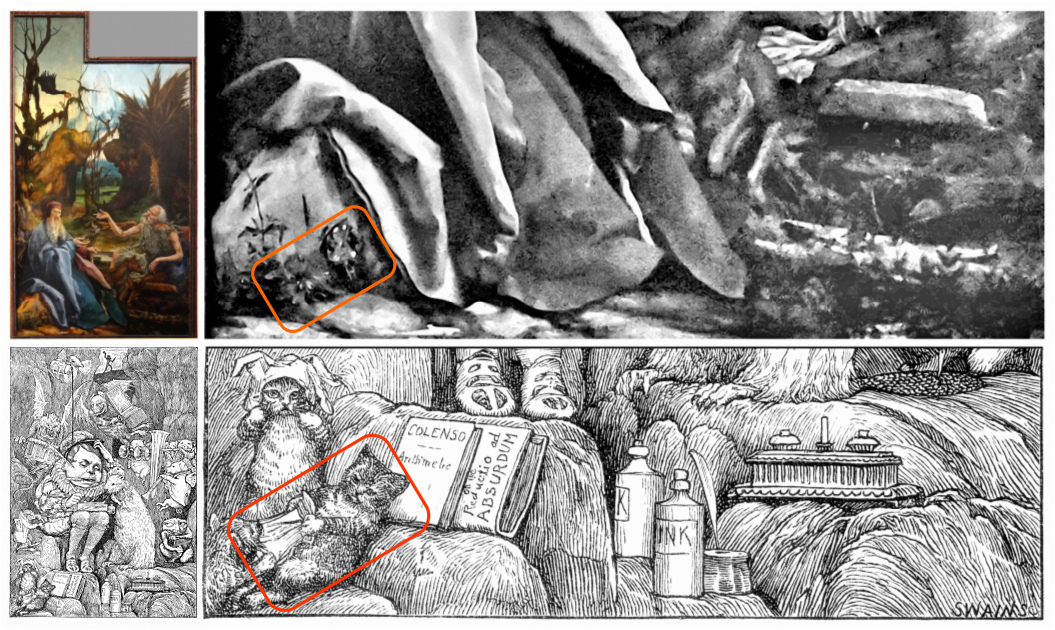
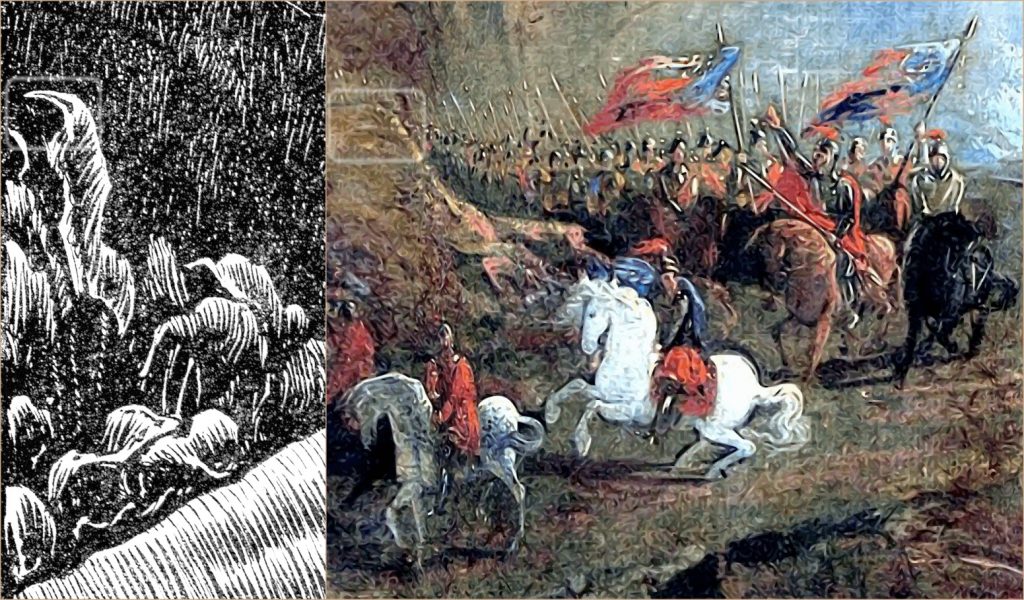
※ [top left]: Illustration to Lewis Carroll’s The Hunting of the Snark (1876) by Henry Holiday: The Vanishing (detail from lower left side depicting some weeds which seem to have some fun with each other)
※ [top right]: John Martin: The Bard (ca. 1817, detail from lower left side, retinex filtered and vectorized, then slightly horizontally compressed)
2018-02-17, updated: 2022-06-22
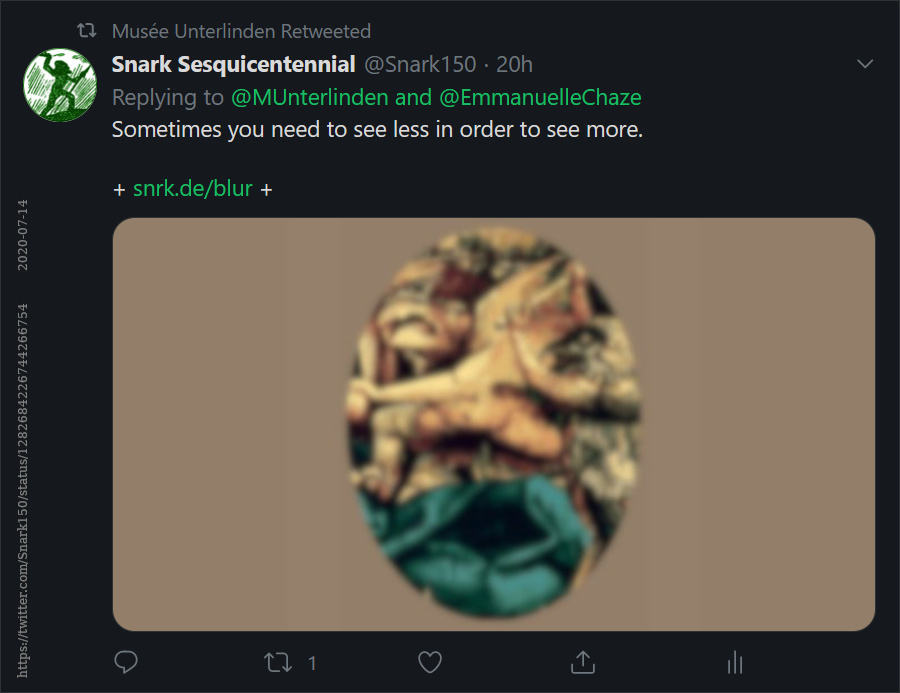
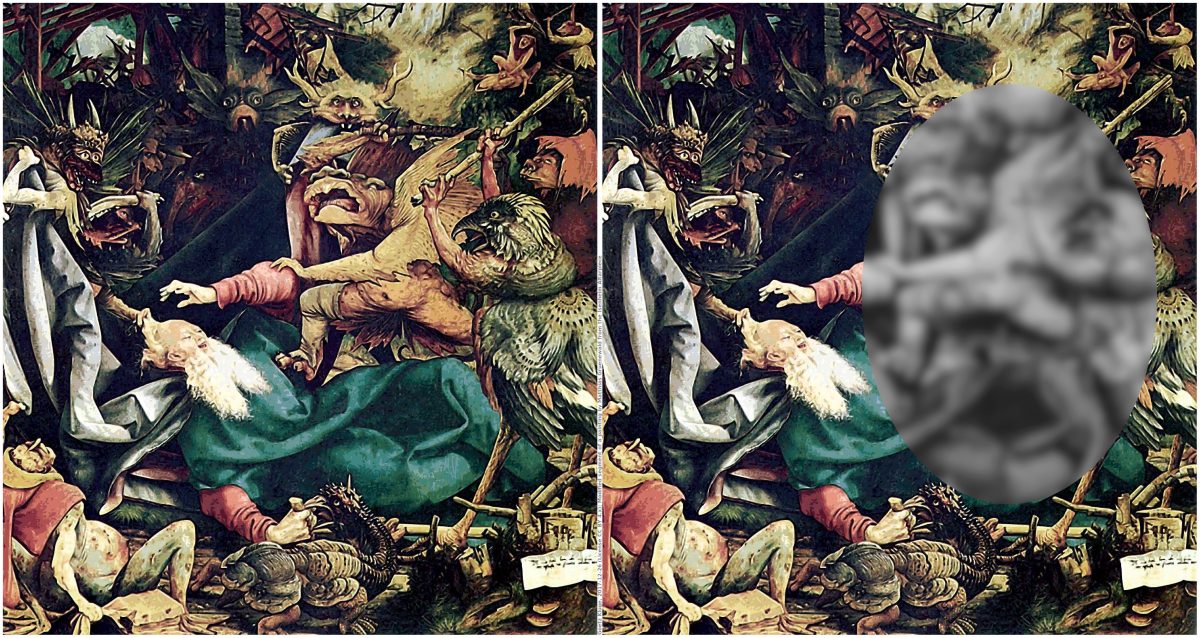
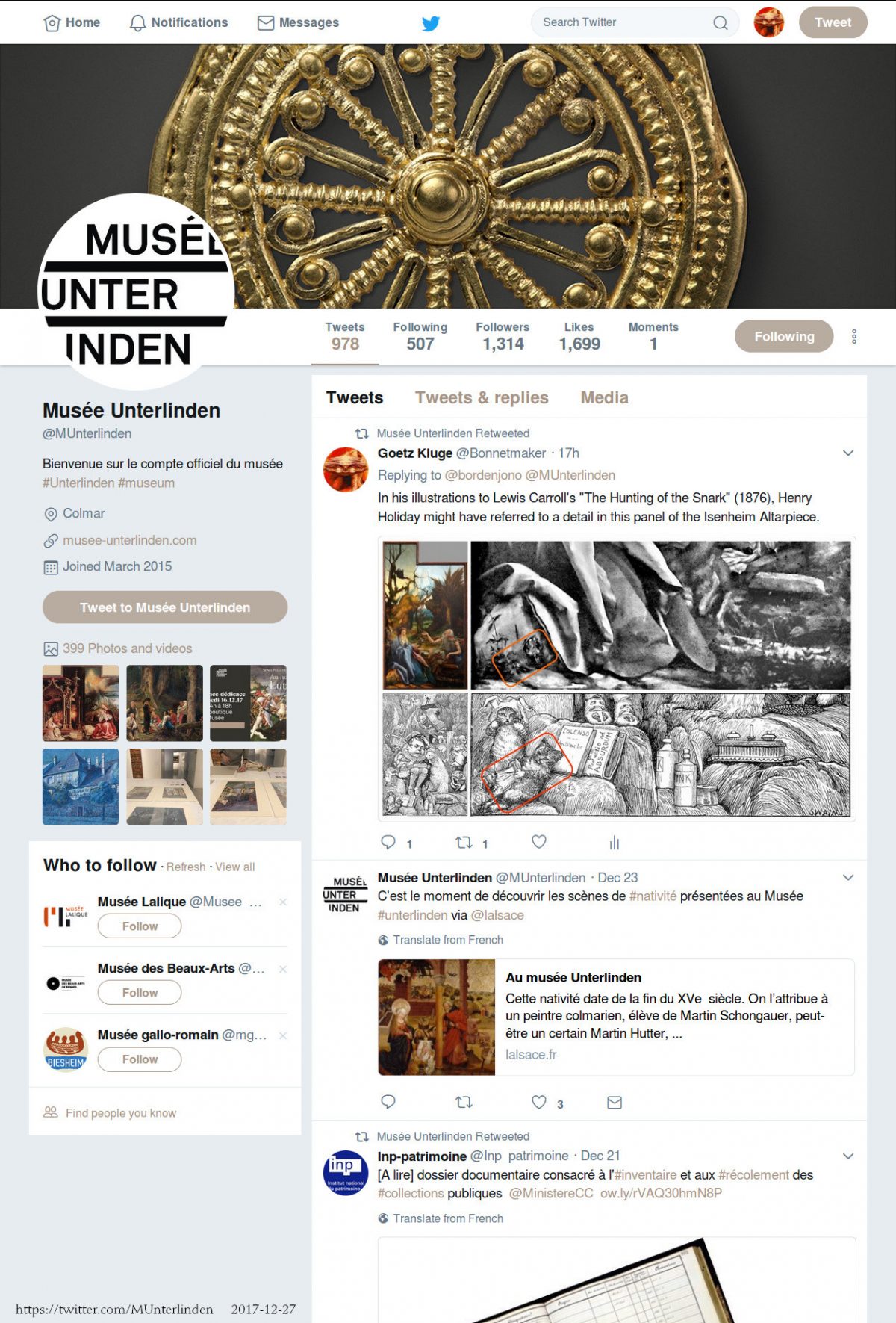
Retweeted by Musée Unterlinden (2017-12-27, 2022-06-20):
Another finding (bycatch from my Snark hunt):

2017-12-27, updated: 2022-06-20