Author: Goetz Kluge
Rudy & Lindsey

“They sought it with thimbles”
The pursuit: the crew “sought it with thimbles”
The allegory: Carroll “thought it with symbols”
03:16 UTC · Jun 28, 2020 · by Steve Venright
See also:
※ The Hunting of the Snark,
※ Alice’s Adventures in Wonderland.
2020-06-28, update: 2021-09-22
De Morgan’s Snark
The tweet below has a link to https://www.demorgan.org.uk/which-snark-came-first-the-tiles-or-the-poem/.
This week, we're celebrating De Morgan's tiles.
Our volunteer, Vanessa, has spent this week painstakingly researching the archives to prove which Snark came first, the De Morgan tile or the Lewis Carroll poem!
Find out on our bloghttps://t.co/MZxlUaQt2F pic.twitter.com/M4S4rR2C6u
— De Morgan Collection (@DeMorganF) September 1, 2020
Inspiration by Re-Interpretation
François Tusques — La Chasse Au Snark
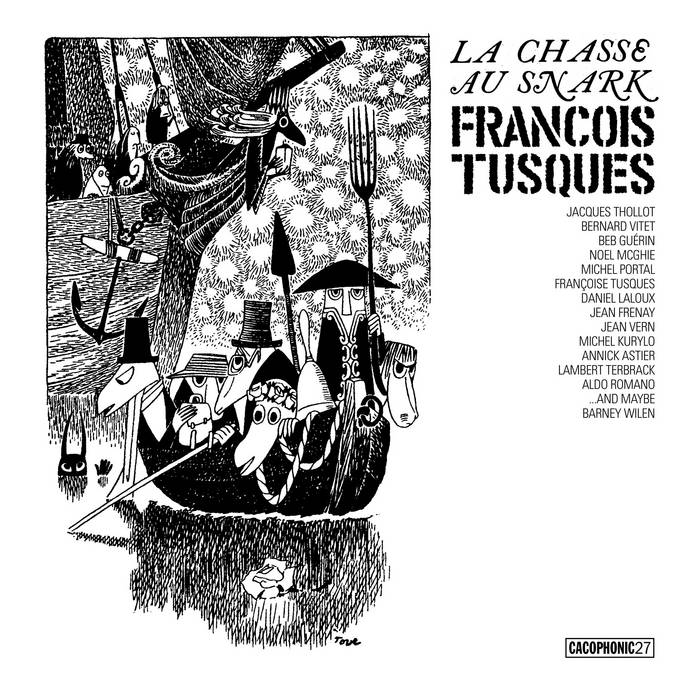 ※ La Chasse Au Snark (studio version, 1968, 15:53)
※ Sa Triste Histoire Il S’Offrit à Dire (live version, 1969, 15:49)
※ Car Le Jubjub Etait Un Boojum, Voyez-Vous (Happening At La Vieille Grille 1967-8/Biennale de Paris 1971, 16:54)
※ Survint Un Silence Suprême (live version, 1968, 20:12)
Cover illustration: Tove Jansson
Links: jazzmusicarchives | YouTube
We are all of us weak at times
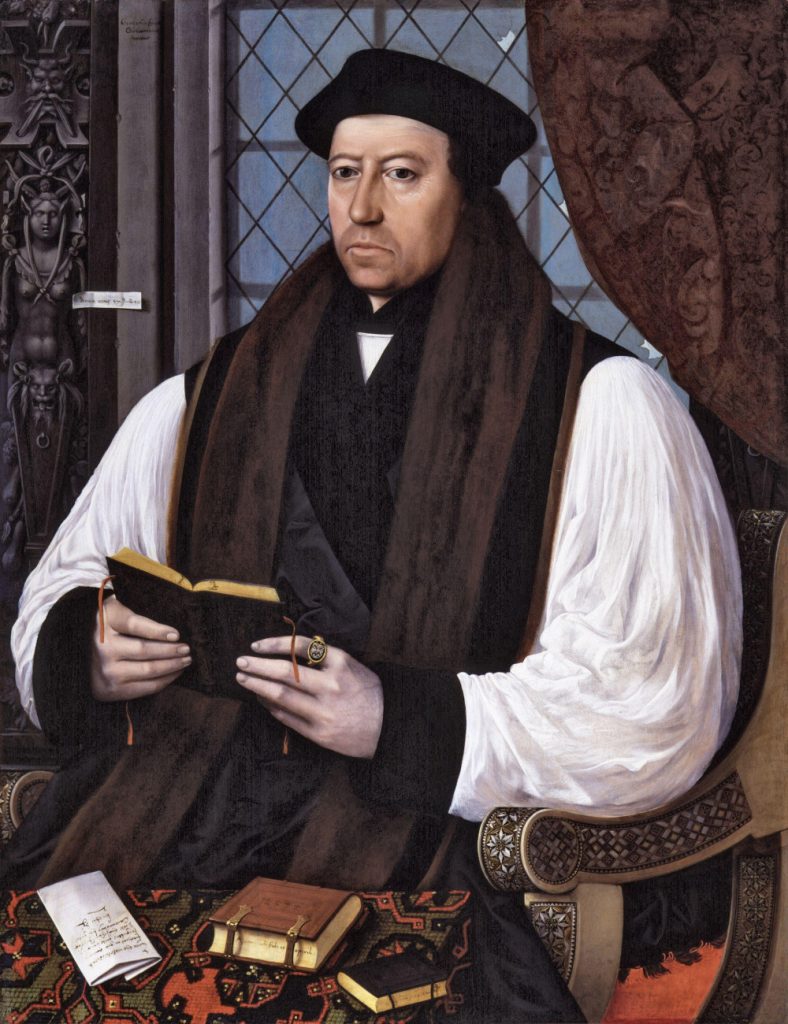 The Baker says:
Boris Karloff reads “The Hunting of the Snark”
The Illuminated Snark
We have 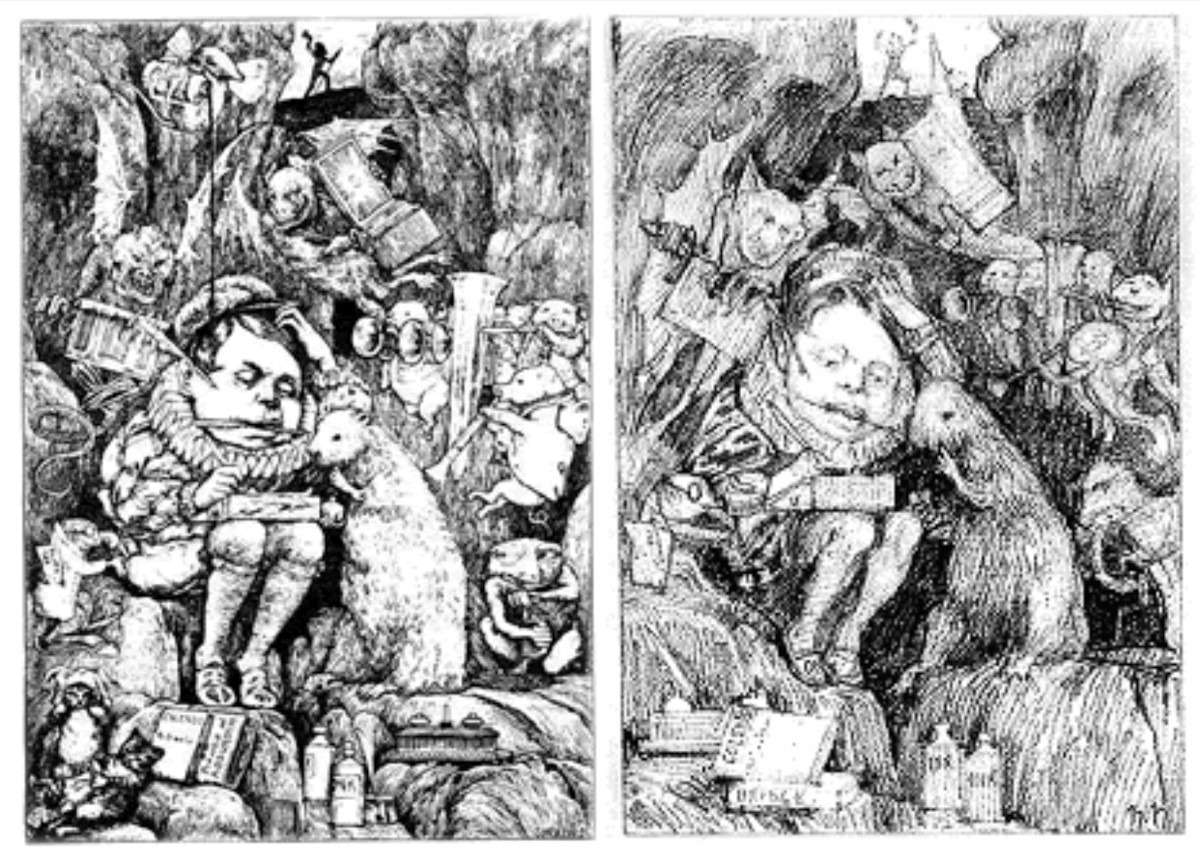 holiday in Bavaria today. For me that’s a good occasion to re-read John Tufail’s “Illuminated Snark” (2004).
http://contrariwise.info/articles/illuminatedsnark.pdf (archive)
2020-06-11
Gags and Serious Stuff
This is worth a follow: a twitter account that offers astonishing insights into Henry Holliday’s illustrations for The Hunting of the Snark. Turns out there are dozens of visual gags in them, detectable only by the enlightened! https://t.co/UIpgTujDvs
— UofG Fantasy (@UofGFantasy) April 13, 2020
Thank you. Gags, yes. But also serious stuff. Henry Holiday thought «L.C. forgot that “the Snark” is a tragedy» (https://t.co/RaClCCPoij). I don't know whether Carroll knew about the hint (https://t.co/kV1kqhERrD) to Thomas Cranmer's burning in Holiday's illustration to fit#8. pic.twitter.com/sHOfL8y3oz
— Snark Sesquicentennial (@Snark150) April 13, 2020
jub jub jub jub jub jub jub jub jub …

Lorenzo and Isabella
Bycatch from my Snark hunt:
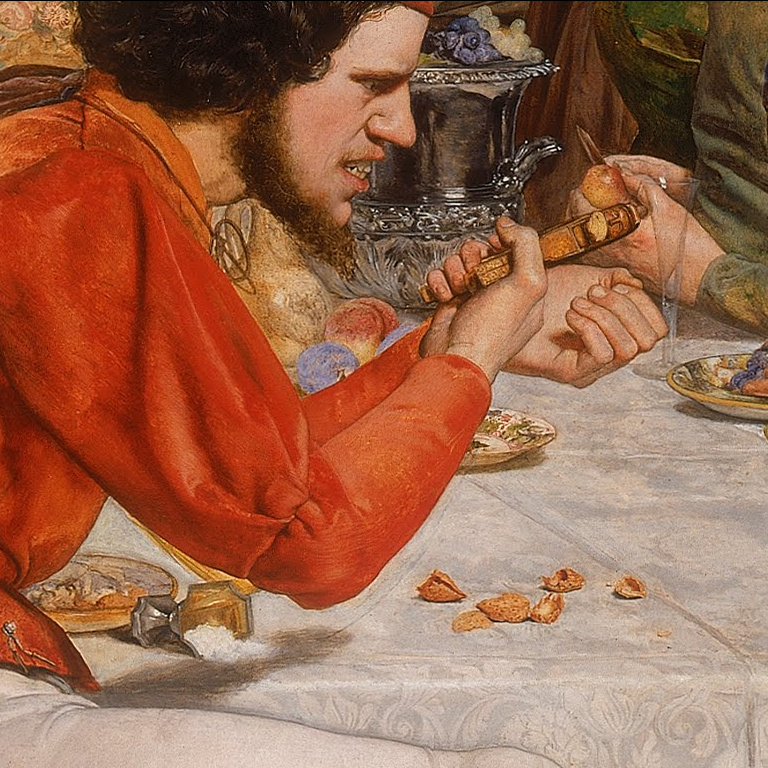
The, well, ambiguity of that “shadow”is known. Also there were some Freudian assumptions regarding what the salt could stand for. But so far I didn’t find any remarks on the impossibility of having a shadow being covered by white salt which isn’t covered by that shadow. To someone who learned physics that is a quite obvious question.
2017-12-17, update: 2020-04-11
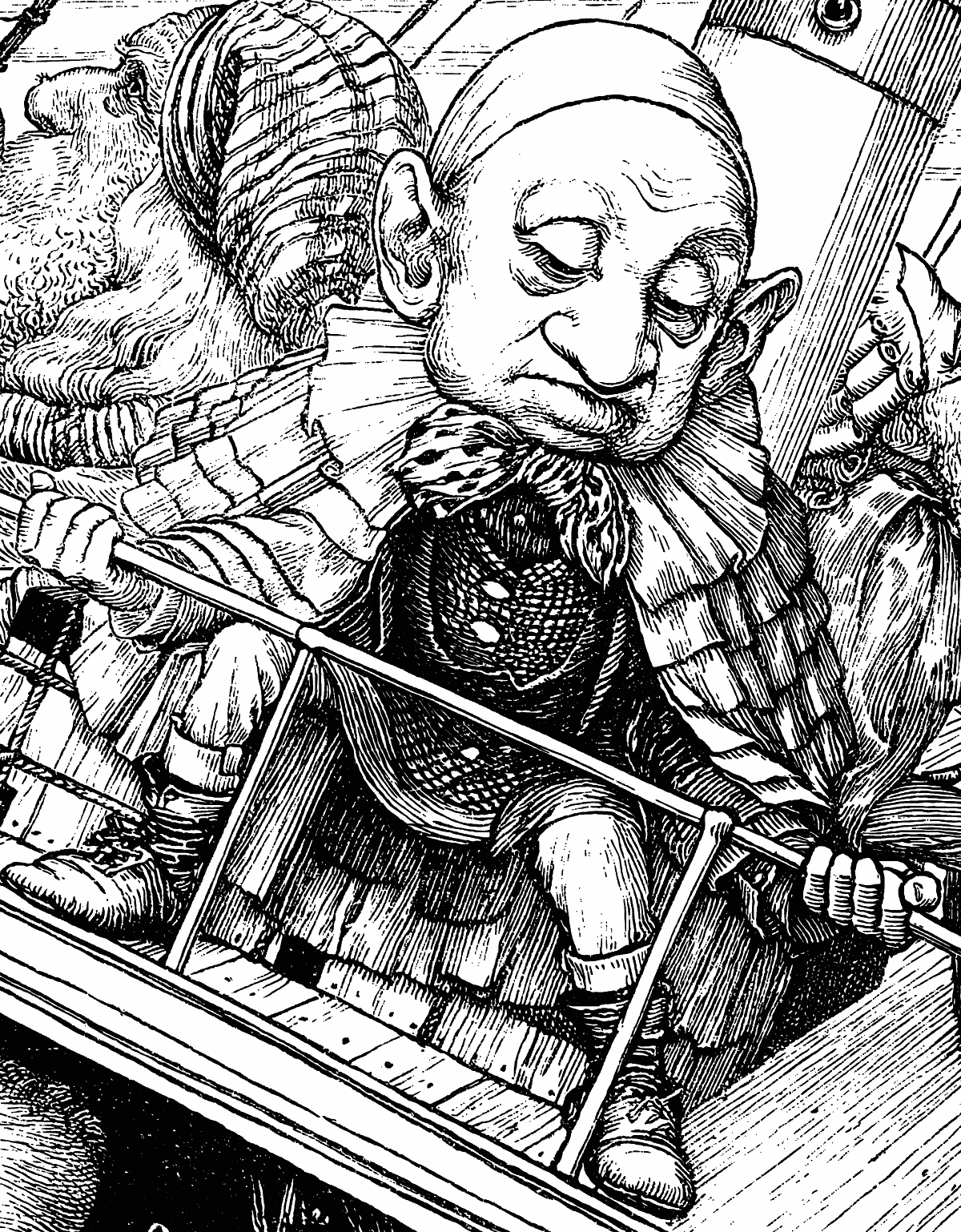
Seven Coats
021 There was one who was famed for the number of things
022 He forgot when he entered the ship:
023 His umbrella, his watch, all his jewels and rings,
024 And the clothes he had bought for the trip.
025 He had forty-two boxes, all carefully packed,
026 With his name painted clearly on each:
027 But, since he omitted to mention the fact,
028 They were all left behind on the beach.
029 The loss of his clothes hardly mattered, because
030 He had seven coats on when he came,
031 With three pairs of boots–but the worst of it was,
032 He had wholly forgotten his name.
2018-06-13, update: 2020-03-20
Mindprinting the Snark
In the page related to this blog post, I quoted a large part of the article Henry Holiday’s Hunting of the Snark art has subconscious order (2019-10-17) by Edmond Furter, where he applies his Mindprint concept.
I don’t understand the Mindprint concept yet and I don’t know whether I agree to Further’s views, probably because I still didn’t dig into his writings. But I added some hyperlinks into the quoted article. They lead you to entries in my blog snrk.de to which Furter might have referred when he wrote his article. Those links weren’t in the original article.
Details are Important
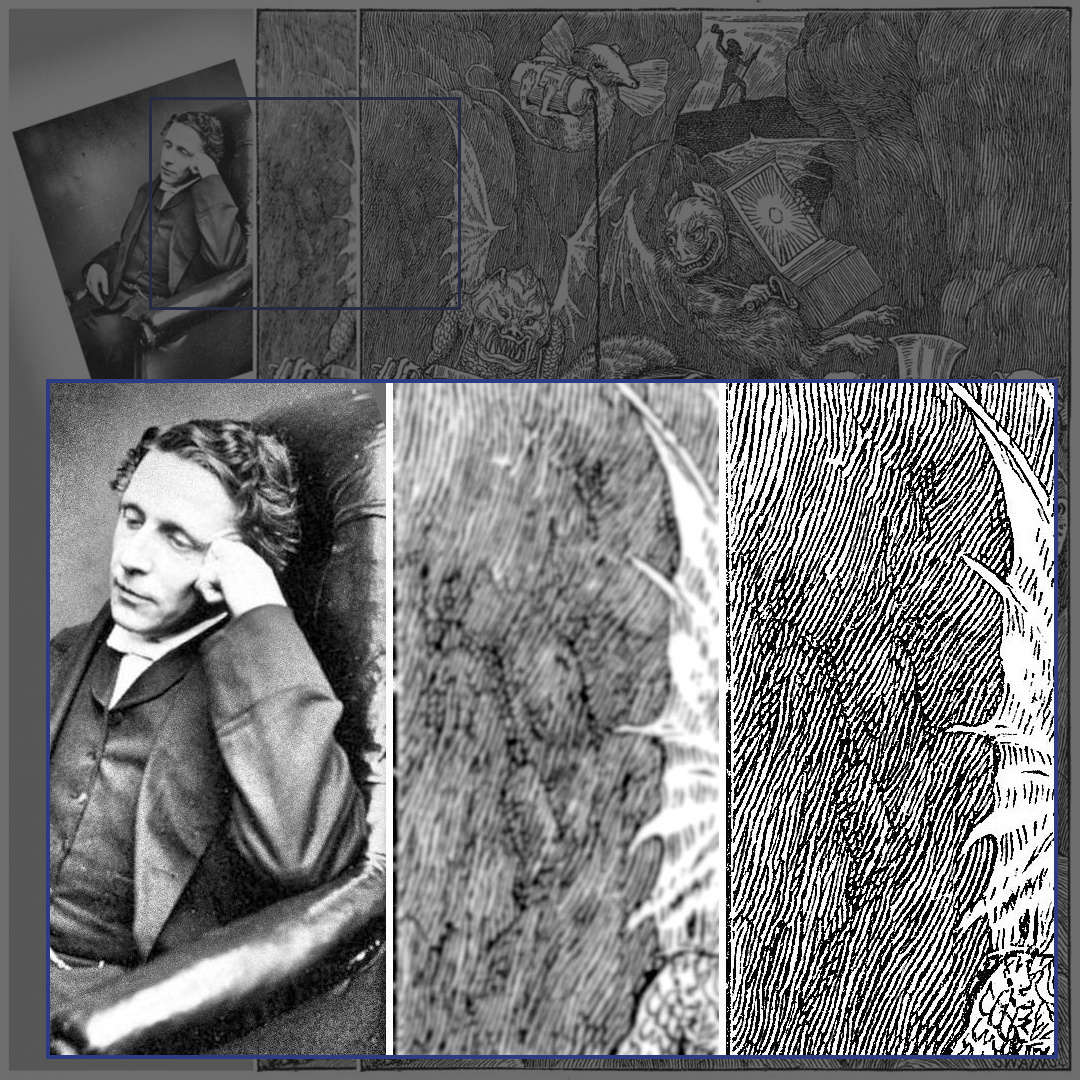
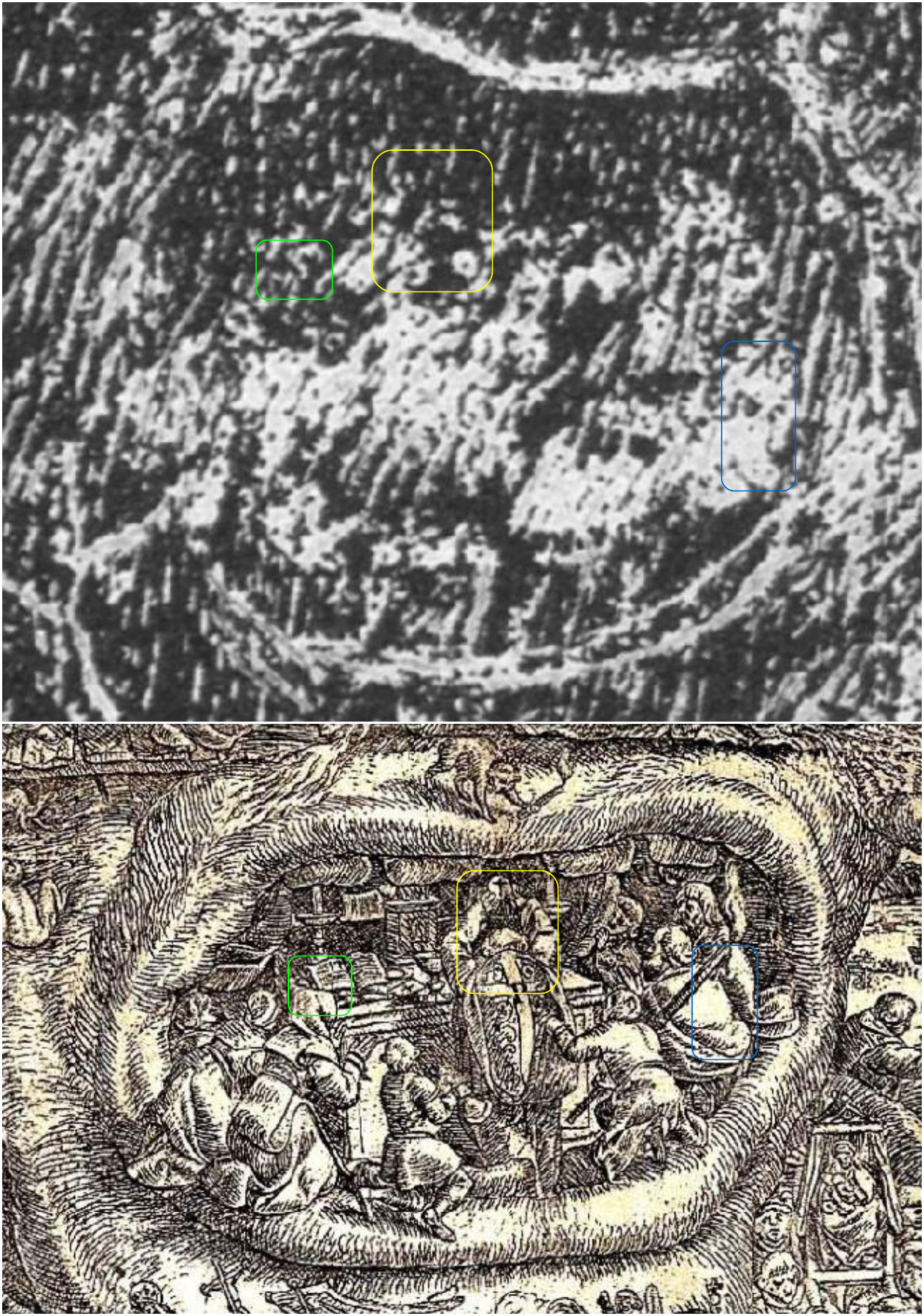
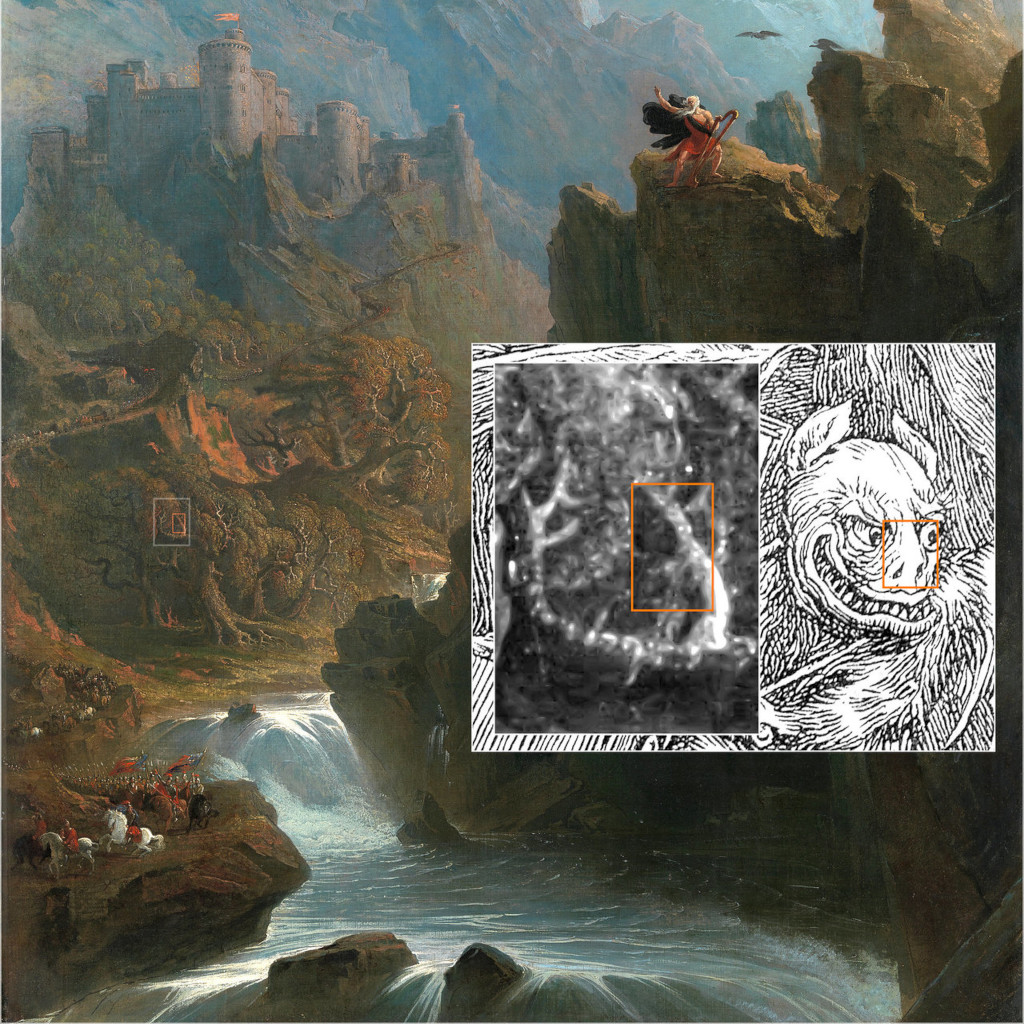
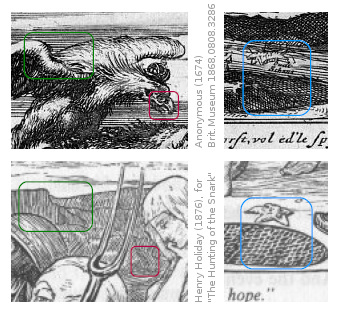
Untangling the Knot
Untangling the Knot
An Analysis of Lewis Carroll’sThe Hunting of the Snark
by Sandra Mann, 2018
[…] The Hunting of the Snark is an allegory for the journey of life which Carroll crafted very carefully to include “difficulties” which he believed had come about because of human error. Life as a journey by boat had long been a favorite metaphor of Carroll’s. In this case the tale would not be of a sweet row on a placid river, but one of a voyage filled with fear and bewilderment and dread. And the moral, that despite our bewilderment, we would all be saved through God’s love and compassion in the end. […]
(Sandra Mann and Mary Hammond are pen names of Mary Hibbs.)
Failure?
https://bookbarnbbi.wordpress.com/2017/12/01/pick-of-the-darwin-room/:
[…] When [The Hunting of the Snark] was published in 1876 it was illustrated by Henry Holiday who, though a very talented artist, failed to capture the surreal nature of Carroll’s poem. The illustrations for this edition however, provided by Gormenghast author Mervyn Peake, are the perfect accompaniment. Peake’s drawings have an uneasy bubbling quality, blending with the silly and macabre feel of the words […]
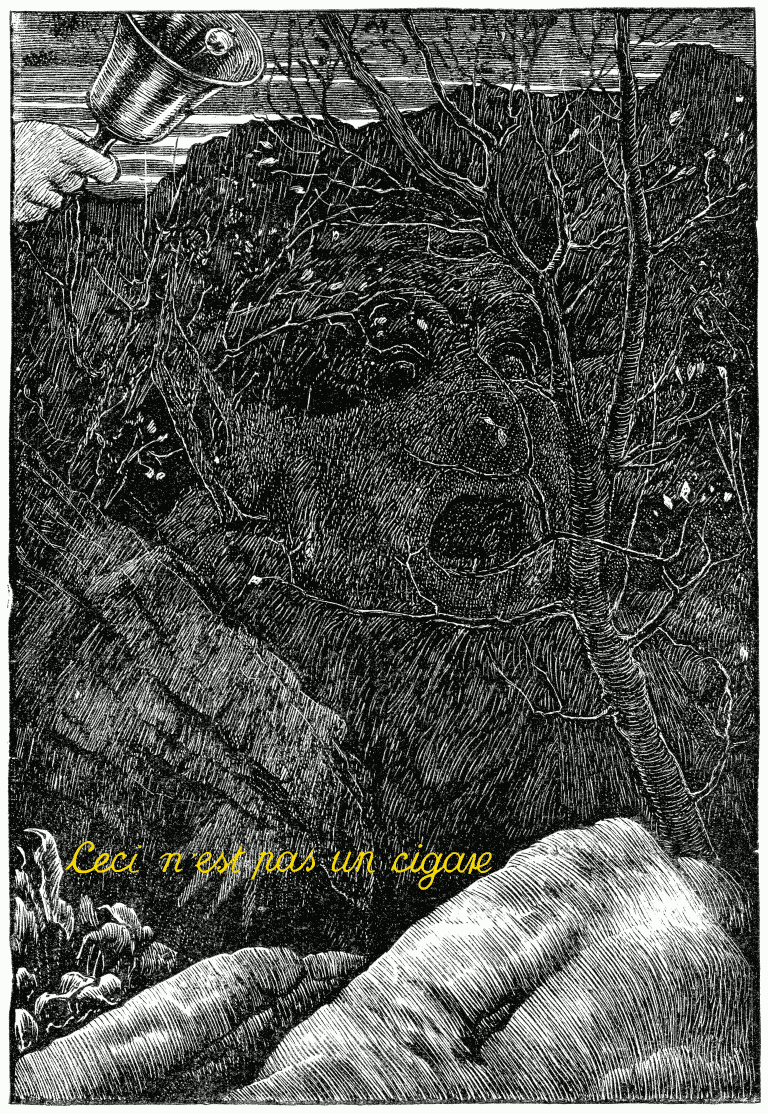
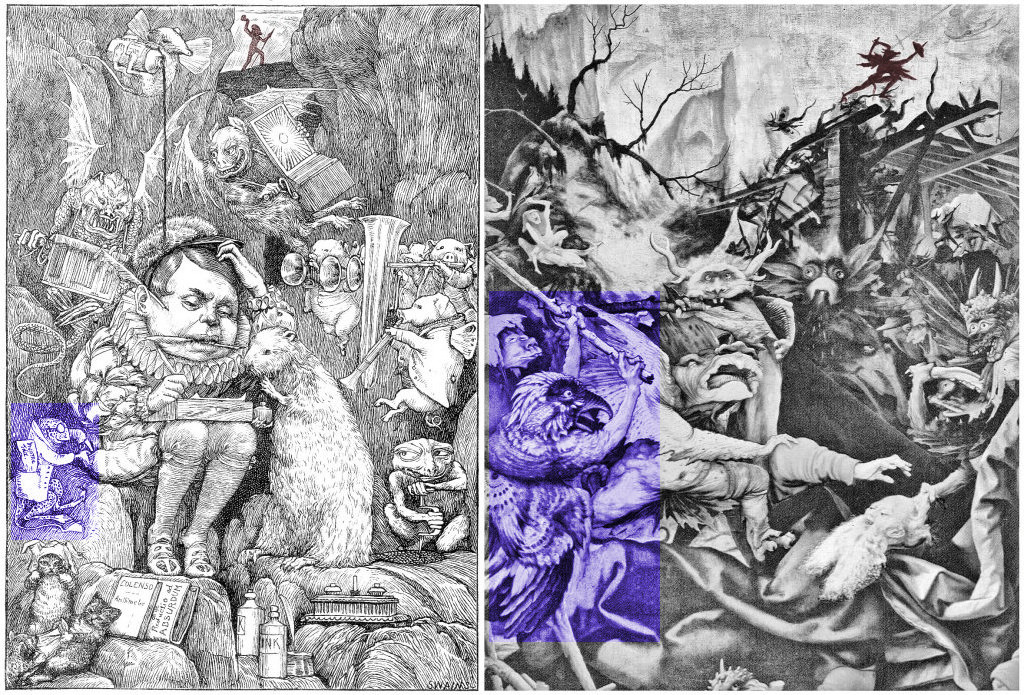
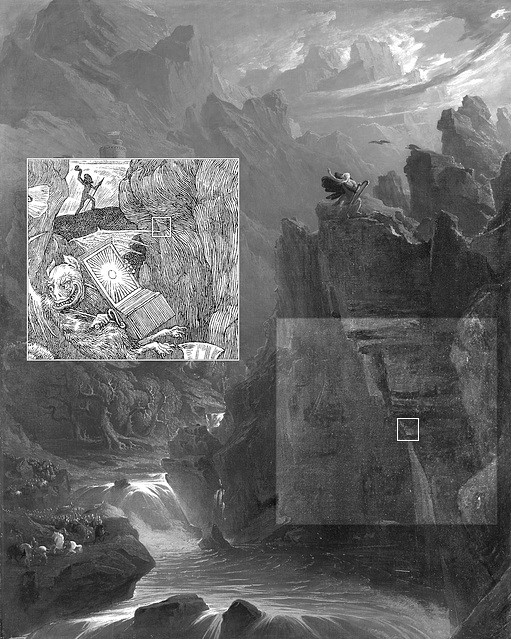
Nothing against Mervyn Peake’s illustrations, but already this illustration (even without the yellow lines and dots which I added) might contain more elements of “surreal nature” than what you find in Mervyn Peake’s illustrations. I like those playful weeds (or animals?) in the lower left corner of Holiday’s illustration.
That’s not the only thing which that corner has to offer.
Another popular path (not) to understand The Hunting of the Snark has been stated more than three times: Some call Carroll’s poem “nonsense”. It isn’t.
Anyway, I don’t think that Holiday failed to convey to us graphically what Carroll meant. The price for his achievement perhaps was that Holiday’s illustrations are less eye pleasing than illustrations like Peake’s.
Holiday’s illustrations are as grotesque as Carroll’s poem.
2018-02-16, updated: 2020-02-01
Constructing Carroll
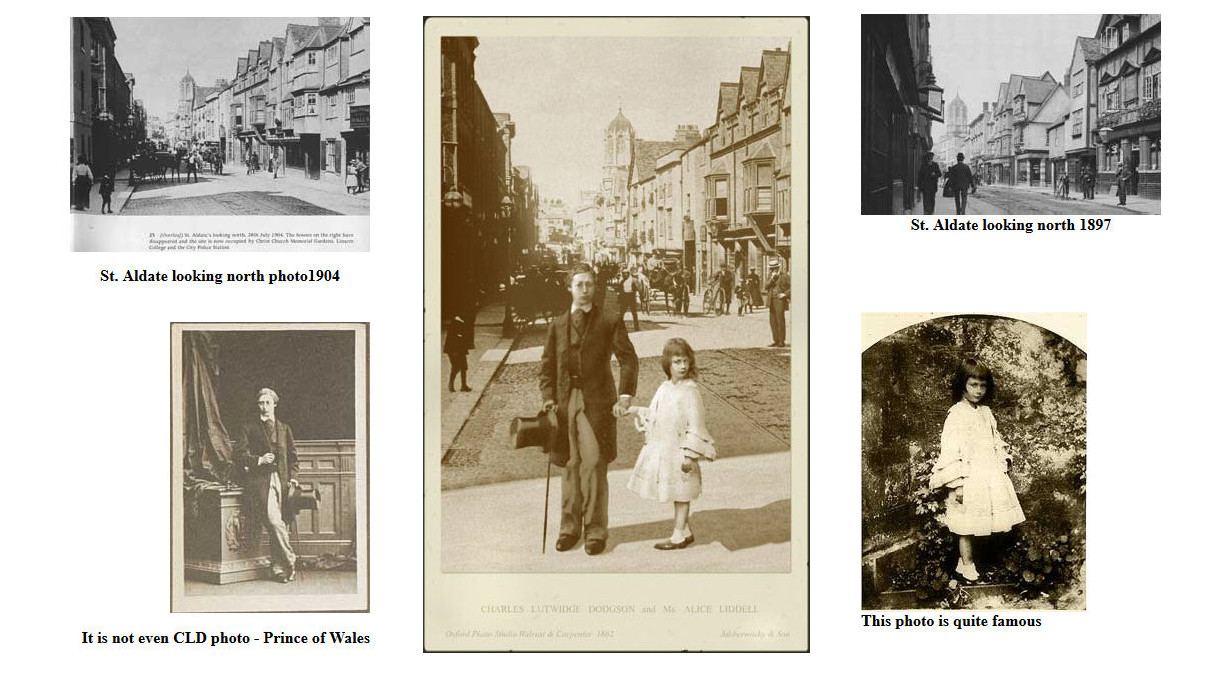
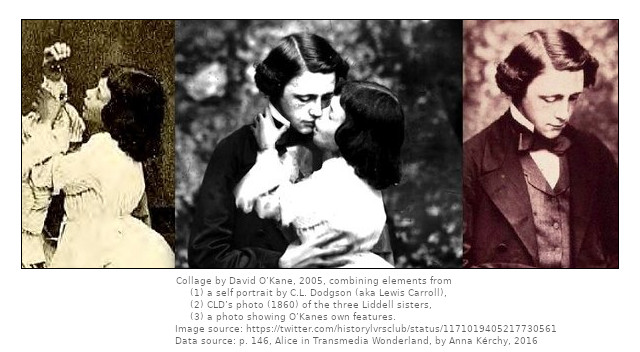
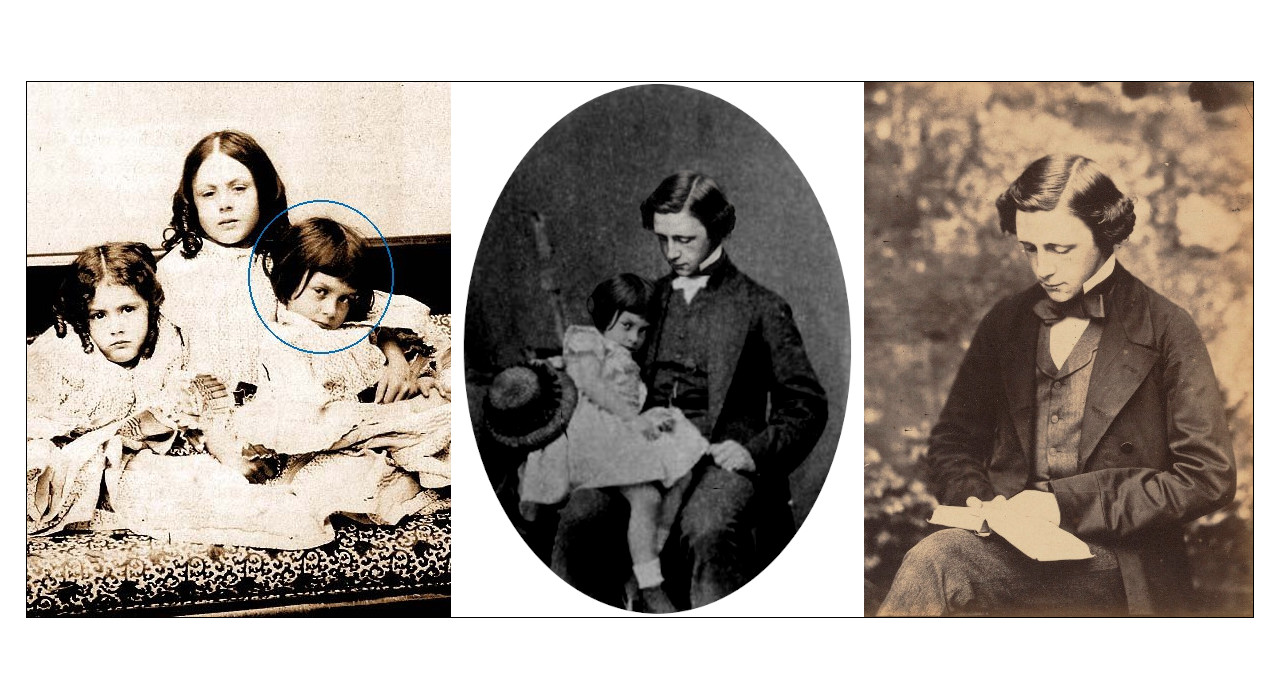
“Edward VI and the Pope” on Twitter
EDWARD VI 1537-1553 was the long-awaited heir of King Henry VIII, the object of his father’s life long policy, to secure the Tudor dynasty.
His religious education was in the hands of Thomas Cranmer.
One result was Edward’s complete & thorough conversion to Protestant Reform. pic.twitter.com/z3NAidGbpq
— SPIRITUAL LIVES (@ken_kalis) December 21, 2019
2019-12-21
Thomas Cranmer, compiler of the first Book of Common Prayer, was burned at the stake #OnThisDay 1556 https://t.co/TnjHqhQEf0
— In Our Time (@BBCInOurTime) March 21, 2019
01
The Revd. C.L. Dodgson under his pen name "Lewis Carroll" wrote "The Hunting of the Snark". It also is about Thomas Cranmer. The illustrator Henry Holiday gave us quite clear hints: https://t.co/nSx3ValV65
cc: @monarchomach
— Goetz Kluge (@Bonnetmaker) March 23, 2019
02
About references from "The Hunting of the Snark" to Thomas Cranmer:
※ Angus MacIntyre (1994),
※ Goetz Kluge (2015 https://t.co/zMvRzqMjvO, 2018 https://t.co/BFTGACMfFA, @Bonnetmaker)
※ Mary Hammond (2017, @Hg4words)
※ Karen Gardiner (2018, @KarenGardiner19) pic.twitter.com/eAaCXDhmt0— Goetz Kluge (@Bonnetmaker) March 17, 2019
03 (comment to 02)
"Edward VI and the Pope: An Allegory of the Reformation." (NPG London)
In this 16th century anti-papal propaganda painting Henry VIII is on the left side. Thomas Cranmer is 2nd from left in the upper row on the right side.
More: https://t.co/h24cchf4YTpic.twitter.com/Dsn8MEdj9u
— Goetz Kluge (@Bonnetmaker) March 23, 2019
04
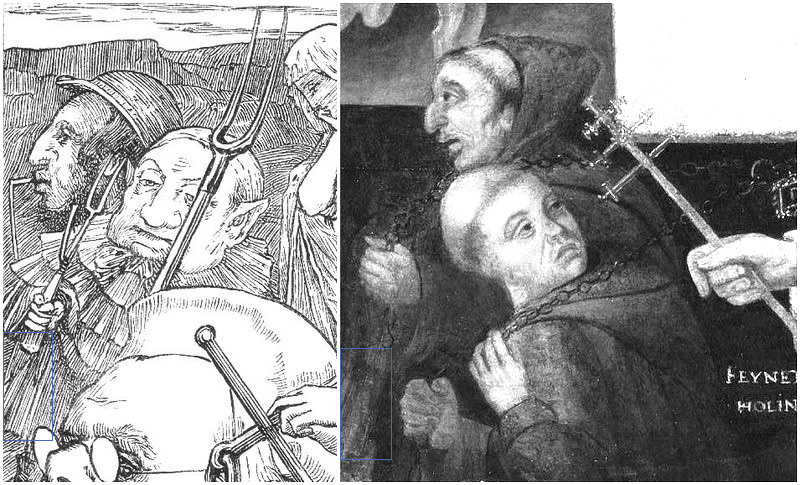
In one of his illustrations (https://t.co/4vu78zj7Jr) to Lewis Carroll's "The Hunting of the Snark", Henry Holiday alluded to the painting "Edward VI and the Pope".
More: https://t.co/hcIThF1al1 pic.twitter.com/INhRxoDly9
— Goetz Kluge (@Bonnetmaker) March 23, 2019
05
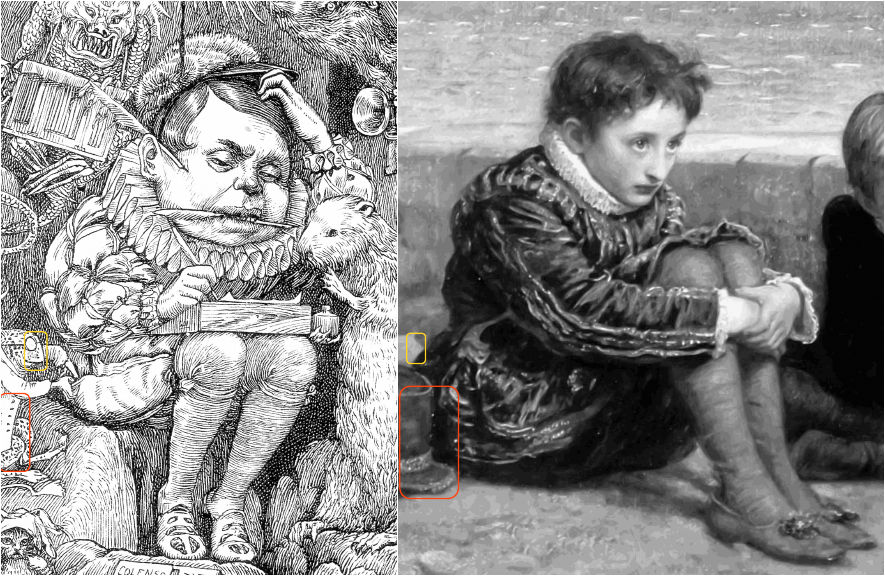
I think that also in another illustration (https://t.co/8RYeUCHtTn) to "The Hunting of the Snark" with a depiction of the Baker's 42 boxes (Cranmer's 42 Articles?), Holiday alluded to the depiction of iconoclasm in "Edward and the Pope".
More: https://t.co/eTIRJW9Moa pic.twitter.com/hTJnmslkvC
— Goetz Kluge (@Bonnetmaker) March 23, 2019
06
Margaret Aston wrote a wonderful book on the painting too. The King and the bedpost
— Justin Champion (@monarchomach) March 23, 2019
07
I read that book. It's a marvel. I tried to contact Margaret Aston, but I was too late. https://t.co/3FJuRjYPlZ pic.twitter.com/pMiuRgXMPv
— Goetz Kluge (@Bonnetmaker) March 23, 2019
08
— Goetz Kluge (@Bonnetmaker) March 23, 2019
09
And the Bedpost ended up in "The Hunting of the Snark" as well. I think that Henry Holiday alluded not only to the "Edward VI and the Pope" painting but also to the painting to which "Edward VI and the Pope" alluded.
There perhaps is an chain of allusions. https://t.co/f7SReLHeXJ pic.twitter.com/fz0esGdShS— Goetz Kluge (@Bonnetmaker) March 23, 2019
10
Correction: … the print to which "Edward VI and the Pope" alluded …
— Goetz Kluge (@Bonnetmaker) March 24, 2019
11
https://t.co/f7SReLHeXJ pic.twitter.com/nS2SlS86Dc
— Goetz Kluge (@Bonnetmaker) March 23, 2019
12 (2019-03-23)